8KB Flash, 512B RAM, 40MHz — the S08 sweet spot for cost-sensitive control
The MC9S08SH8CTJ: It carries 8KB of on-chip Flash program memory and 512 bytes of RAM — enough for a modest control loop, a communication stack, and a handful of state variables without external memory. The 17 general-purpose I/O lines give you room for a keypad matrix, a few indicator LEDs, and a sensor interface, while the 12-channel 10-bit ADC reads analog inputs directly — no external converter needed for most transducer signals. On-chip peripherals include a low-voltage detect (LVD) circuit that resets the MCU on a brownout, a power-on reset (POR) for clean startup, a PWM module for motor or LED dimming, and a watchdog timer (WDT) that catches runaway code — all standard safety netting for an embedded design that runs unattended.
Serial interfaces and supply — what connects and what powers it
The MC9S08SH8CTJ integrates I²C, SCI (UART), SPI, and LINbus serial interfaces — enough to talk to a temperature sensor over I²C, log data out a UART to a PC, or join an automotive LIN node. The LIN support is a differentiator in this class: it makes the part a candidate for a seat controller or a window-lift module without an external LIN transceiver on the MCU side. The wide range also means it can tolerate a 3.6V lithium cell as it sags — no separate regulator needed for the MCU in a battery-powered sensor node. For tighter timing, the part can still use an external clock source.
20-TSSOP footprint and temperature grade
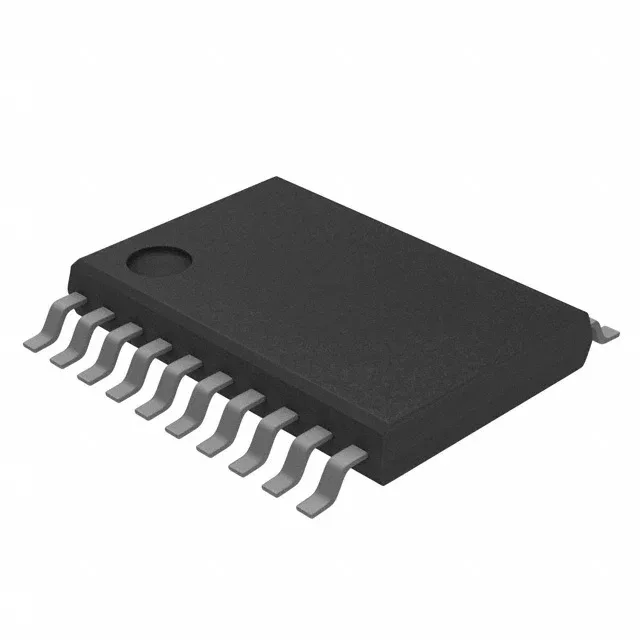
Housed in a 20-lead TSSOP (4.4mm body width, 0.65mm pitch), the MC9S08SH8CTJ fits on a two-layer board without heroic fan-out — the 0.65mm pitch is forgiving enough for hand-assembly rework in a prototype run. It handles an unheated equipment shed in winter and a warm control cabinet in summer without derating the clock speed or flash retention.