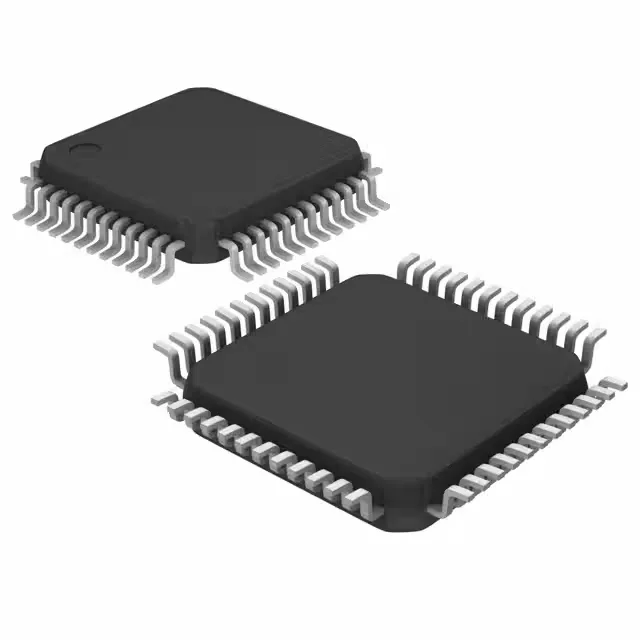
NXP USA Inc. MKL05Z32VLF4R — Microcontrollers & Processors (MCU / MPU / DSP)

NXP MKL05Z32VLF4R Kinetis KL0 ARM Cortex-M0+ MCU, 48 MHz

MPNMKL05Z32VLF4R
Active

NXP Kinetis KL0 series, ARM Cortex-M0+, 32-bit, 48 MHz, 32 KB Flash, 4 KB RAM, 14×12-bit ADC, 1×12-bit DAC, 41 I/O, I²C/SPI/UART, -40°C to 105°C, 1.71 V–3.6 V, 48-LQFP (7×7 mm), Tape & Reel.

$3.3175Ref. price · indicative, final on quote
Independent supplier — new & surplus stockAuthenticity-screened · ESD-safe packingListing updated Jul 2026

Specifications

MKL05Z32VLF4R specifications
ParameterValue
SeriesKinetis KL0
MountingSurface Mount
Oscillator typeInternal
Program memory typeFLASH
Voltage - supply (Vcc (Vdd))1.71V ~ 3.6V
Operating temperature-40°C~105°C(TA)
Speed48MHz
PackageTape & Reel (TR)
RAM size4K x 8
Core size32-Bit Single-Core
PeripheralsBrown-out Detect/Reset, DMA, LVD, POR, PWM, WDT
ConnectivityI²C, SPI, UART/USART
Number of i (O)41
Core processorARM® Cortex®-M0+
Case48-LQFP
Data convertersA/D 14x12b; D/A 1x12b
Program memory size32KB (32K x 8)

Product details

Temperature range and supply — industrial fit

No last-time-buy window has been announced, and the part remains in NXP's standard production schedule.

Analog integration reduces external count

The 14-channel 12-bit ADC and single 12-bit DAC cover the analog front-end for most sensor-conditioning and closed-loop control applications. DMA offloads peripheral data movement from the Cortex-M0+ core, keeping interrupt latency predictable.

Frequently asked questions

What is MKL05Z32VLF4R's listed speed?

The core runs at 48 MHz. That clock rate sets the ceiling for PWM update rates, ADC sampling intervals, and communication bit rates in control-loop applications.

What is the difference between MKL05Z32VLF4R and MKL05Z32VLC4?

The two parts are functionally identical — same 48 MHz Cortex-M0+, 32 KB Flash, 4 KB RAM, and peripheral set. The difference is the package: the VLF4 variant comes in a 48-LQFP (7×7 mm), while the VLC4 uses a 32-LQFP (7×7 mm) with fewer I/O pins brought out. If your board layout has room for the 48-pin footprint and you need all 41 I/O, the VLF4 is the correct choice.