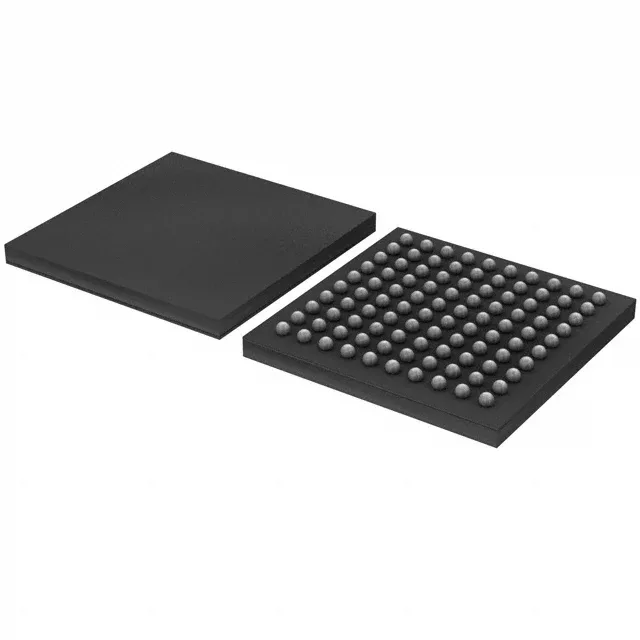
NXP USA Inc. LPC4333JET100E — Microcontrollers & Processors (MCU / MPU / DSP)

LPC4333JET100E MCU, 32-Bit Dual-Core, 204MHz, 512KB Flash

MPNLPC4333JET100E
Active

NXP LPC43xx series, LPC4333JET100E, 32-bit Dual-Core ARM Cortex-M4/M0 MCU, 204MHz, 512KB Flash, 136K x 8 RAM, 16K x 8 EEPROM, 49 I/O, CAN, Ethernet, USB OTG, -40 to 105°C, 100-TFBGA.

$19.5600Ref. price · indicative, final on quote
Packaging100-TFBGA
RoHSROHS3 Compliant
SeriesLPC43xx
Independent supplier — new & surplus stockAuthenticity-screened · ESD-safe packingListing updated Jul 2026

Specifications

LPC4333JET100E specifications
ParameterValue
SeriesLPC43xx
MountingSurface Mount
Oscillator typeInternal
Program memory typeFLASH
Voltage - supply (Vcc (Vdd))2.2V ~ 3.6V
Operating temperature-40°C ~ 105°C (TA)
Speed204MHz
PackageTray
RAM size136K x 8
Core size32-Bit Dual-Core
EEPROM size16K x 8
PeripheralsBrown-out Detect/Reset, DMA, I²S, POR, WDT
ConnectivityCANbus, EBI/EMI, Ethernet, I²C, IrDA, Microwire, SD, SPI, SSI, SSP, UART/USART, USB, USB OTG
Number of i (O)49
Core processorARM® Cortex®-M4/M0
Case100-TFBGA
Data convertersA/D 4x10b; D/A 1x10b
Program memory size512KB (512K x 8)

Product details

Dual-core architecture at 204 MHz — what it buys you

The NXP LPC4333JET100E pairs an ARM Cortex-M4 running at 204 MHz with a Cortex-M0 companion core. The M4 handles the DSP-heavy loops — motor control FOC, audio processing, or sensor fusion — while the M0 offloads real-time housekeeping like CAN message filtering or UART buffering. That split keeps interrupt latency predictable on the M4 side without a separate CPLD or small MCU for the low-level I/O. Program memory is 512 KB of on-chip Flash, backed by 136K x 8 of SRAM and a separate 16K x 8 EEPROM block for calibration constants or boot parameters that survive a firmware update. The Flash density suits a single-application image with room for a small OTA staging buffer; the EEPROM avoids wearing the main Flash for frequent parameter writes. Connectivity covers the industrial networking essentials: CANbus for machine-level bus, Ethernet for higher-level plant-floor links, USB OTG for configuration or data logging, plus EBI/EMI for an external parallel LCD or SRAM expansion. The 49 available GPIOs are enough for a modest control panel with a character display, a few pushbuttons, and encoder inputs, but a dense I/O design will need the EBI to hang a port expander.

Plan for a 4-layer PCB with a solid ground plane under the BGA to manage the 2.2 to 3.6 V supply rails and the high-frequency switching edges from the 204 MHz core. Internal oscillator is available, but for CAN or Ethernet timing accuracy an external crystal or oscillator is recommended — the internal RC is adequate for boot and low-speed UART, not for bus-level jitter budgets.

Frequently asked questions

What is LPC4333JET100E's listed speed?

The core processor runs at 204 MHz on the ARM Cortex-M4 side.

What is the closest pin-compatible alternative to LPC4333JET100E?

Within the LPC43xx family, the LPC4330 and LPC4337 share the same 100-TFBGA footprint and peripheral set, differing in Flash size and package options. Verify the exact memory and feature match against your firmware image before substituting.

What compliance documentation does LPC4333JET100E have?

The device is ROHS3 compliant. No REACH, UL, or IEC documentation is listed in the available records.