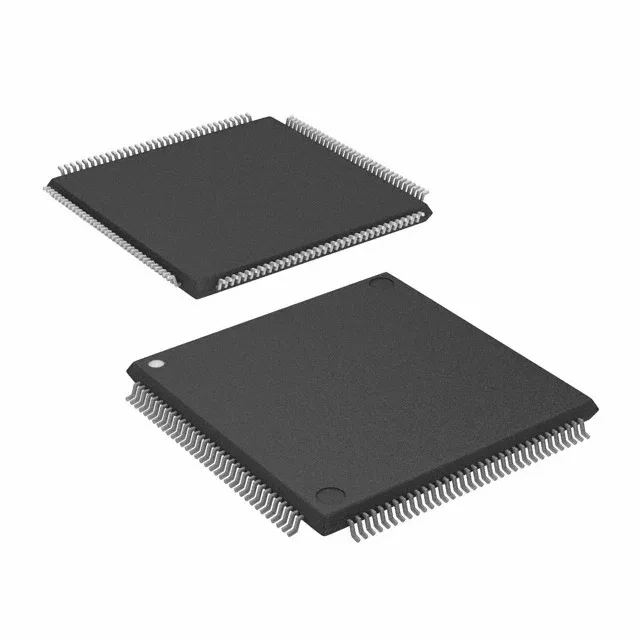
NXP USA Inc. LPC1788FBD144,551 — Microcontrollers & Processors (MCU / MPU / DSP)

NXP LPC1788FBD144,551 ARM Cortex-M3 MCU, 120 MHz, 512 KB Flash

MPNLPC1788FBD144,551
Active

NXP LPC17xx series ARM Cortex-M3 MCU, LPC1788FBD144,551, 120 MHz, 512 KB Flash, 96 KB SRAM, 109 I/O, Ethernet/USB OTG/CAN, 8x12b ADC, 1x10b DAC, 2.4–3.6 V, -40°C to 85°C, 144-LQFP (20×20 mm) Tray.

$20.4900Ref. price · indicative, final on quote
Packaging144-LQFP
RoHSROHS3 Compliant
SeriesLPC17xx
Independent supplier — new & surplus stockAuthenticity-screened · ESD-safe packingListing updated Jul 2026

Specifications

LPC1788FBD144,551 specifications
ParameterValue
SeriesLPC17xx
MountingSurface Mount
Oscillator typeInternal
Program memory typeFLASH
Voltage - supply (Vcc (Vdd))2.4V ~ 3.6V
Operating temperature-40°C ~ 85°C (TA)
Speed120MHz
PackageTray
RAM size96K x 8
Core size32-Bit Single-Core
EEPROM size4K x 8
PeripheralsBrown-out Detect/Reset, DMA, I²S, LCD, Motor Control PWM, POR, PWM, WDT
ConnectivityCANbus, EBI/EMI, Ethernet, I²C, Microwire, Memory Card, SPI, SSI, SSP, UART/USART, USB OTG
Number of i (O)109
Core processorARM® Cortex®-M3
Case144-LQFP
Data convertersA/D 8x12b; D/A 1x10b
Program memory size512KB (512K x 8)

Product details

120 MHz clock on this Cortex-M3 core. Runs a lightweight RTOS, a TCP/IP stack, and a display update loop without external memory.

Memory budget for a gateway design

The 96 KB SRAM is the tighter resource: if you plan to buffer multiple Ethernet frames or run a full frame buffer for a QVGA display, you will want to allocate an external SDRAM or SRAM on the EBI/EMI bus.

Listed as Active in production.

Frequently asked questions

What is the maximum frequency of LPC1788FBD144,551?

The LPC1788FBD144,551 runs at 120 MHz on its ARM Cortex-M3 core.

What is the closest pin-compatible alternative to LPC1788FBD144,551?

The LPC1788 family includes multiple Flash and SRAM density options in the same 144-LQFP footprint. A higher-density sibling (e.g., LPC1789 with 512 KB Flash and 96 KB SRAM) is pin-compatible and can be substituted without a PCB change, provided the application fits within the same supply and temperature ratings.