74HC4051PW-Q100,11
Nexperia USA Inc. · 74HC Series
IC MUX 8:1 120OHM 16TSSOP
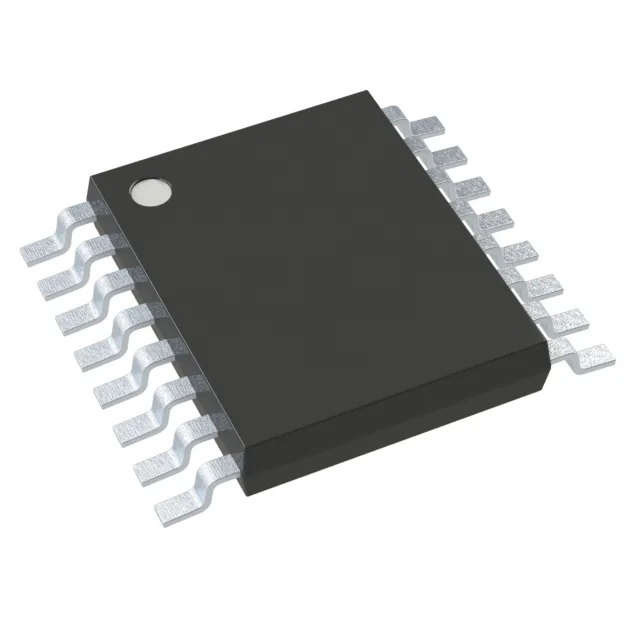
MOQ 1 · Tape & Reel (TR) Cut Tape (CT) · RoHS · EIA-481 · DAP/DDP · T/T
Technical specifications
| Parameter / Attribute | Specification / Value |
|---|---|
| Series | 74HC |
| Mounting | Surface Mount |
| Voltage - supply, dual (V±) | ±1.5V ~ 5V |
| Voltage - supply, single (V+) | 2V ~ 10V |
| Current - leakage (IS(off)) | 400nA |
| Operating temperature | -40°C ~ 125°C (TA) |
| -3db bandwidth | 180MHz |
| Grade | Automotive |
| Package | Tape & Reel (TR) Cut Tape (CT) |
| Qualification | AEC-Q100 |
| Case | 16-TSSOP (0.173\", 4.40mm Width) |
| Number of circuits | 1 |
| On-State resistance | 120Ohm |
| Switch time (Ton, toff) | 51ns, 42ns |
| Multiplexer (Demultiplexer circuit) | 8:1 |
| Channel-to-Channel matching (ΔRon) | 6Ohm |
| Channel capacitance (CS(off), CD(off)) | 3.5pF |
Need Stock or a Drop-in Second-Source for 74HC4051PW-Q100,11?
Package: DIP-16 / SOIC-16 · Pin-compatible replacements with immediate Shenzhen spot stock
The 405x row is the analog switch drawer of instrumentation and industrial design: the CD4051B selects one of eight channels with three address pins, the 4052 switches differential pairs four ways, the 4053 is three independent SPDT switches - all in the same 16-pin body with on-chip binary decoding, 20V-capable analog rails and hundred-ohm on-resistance of the 4000B generation. The naming deserves the wall chart it gets: across the row the last digit changes the channel topology, not the size or the pin count, and the 74HC405x twins - identical pinouts, faster and more linear - quietly cap the analog rails at 12V where the 4000B parts ran to 20.
Verified Pin-Compatible Replacements (3 verified alternatives)
Pin-Pure 4000B Second Source
Shenzhen Spot Stock (24-48h Dispatch)
The Nexperia eight-channel member of the standard row: same 3-address decoding, same INHIBIT, same 20V-capable analog switch envelope.
Digital 3-20V with analog to the rails in the 4000B tradition; ~125 ohm class on-resistance at the 15V rating point.
The Faster Twin with a Lower Ceiling
Shenzhen Spot Stock (24-48h Dispatch)
The silicon-gate version: pin-identical to the 4000B row by documented standard, faster switching and lower, more linear on-resistance - with the analog supply window tightened to about 12V.
The trade in one line: 4000B analog rails to 20V, HC405x analog rails to about 12V (digital side 2-6V). Fitting the HC twin into a 15V analog design over-volts it.
The Triple SPDT of the Same Row
Shenzhen Spot Stock (24-48h Dispatch)
Three independent SPDT switches with three separate control pins (not binary decoding) in the same 16-pin body - the member for signal routing and audio-path switching where three simple throws beat one multiplexer.
Same 4000B envelope.
Buyer & Quality Checklist for Sourcing Alternatives
- The last digit is the topology, not a grade: 4051 selects one of eight, 4052 switches differential pairs one-of-four, 4053 is three independent SPDT switches. Same body, different circuit - the substitution that fits and does something else is this row.
- The HC twins are pin-identical with a lower analog ceiling (about 12V against 20V): in industrial 15V analog designs they over-volt; in 5V and 10V designs they outperform on speed and linearity. Match the rail before the speed.
- On-resistance flows through the measurement: about 125 ohms at the 4000B rating point, and it varies with signal level - downstream op-amp gain or ADC scaling must live with that resistance in series, or the reading sags with channel count.
- INHIBIT (enable) is an active function: multiplexers that "leak one channel" after repair usually have the inhibit pin floating - tie it per the design, high or low, and stop debugging the channels.
- Break-before-make is a feature, not an accident: circuits that relied on it survive substitutions from faster families with different make-before-break behavior - check the switching overlap in signal-routing duty.
- The VEE pin sets the analog negative rail: 4000B parts switch bipolar signals by taking VEE below ground - repairs that tie VEE to ground lose the negative half of the waveform.
Frequently Asked Technical Questions
Q: What is the difference between CD4051, CD4052 and CD4053?
A: Channel topology in one body: 4051 is one-of-eight multiplexing, 4052 is differential one-of-four (pairs switch together), 4053 is three independent SPDT switches. Pin counts and packages match; the internal connections do not - read the last digit.
Q: Can 74HC4051 replace CD4051B?
A: Pin-identical and documented as such, with one ceiling: the HC analog rails stop at about 12V where the 4000B parts ran to 20V. Under that ceiling the HC part is the faster, more linear choice; above it, the substitution over-volts.
Q: Why does my multiplexer channel leak or stick?
A: Check the INHIBIT/enable pin first (floating inputs misbehave in factory-looking ways), then the address lines for levels the old design drove at 12V logic. The switch itself is usually the last suspect - it is passive.