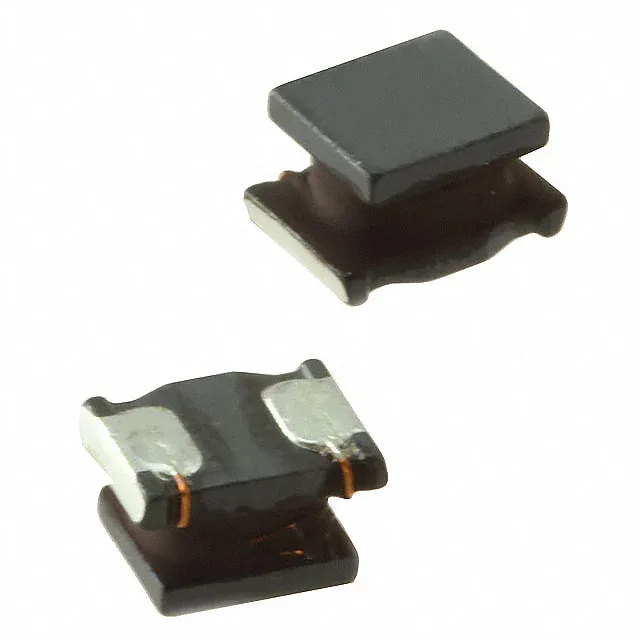
120 µH, 130 mA — what the ratings mean for your BOM
The LQH43NH121J03L is a 120 µH drum-core wirewound inductor in Murata's LQH43 series, rated for 130 mA continuous DC current with a maximum DC resistance of 3.12 Ω. The 120 µH value at ±5% tolerance suits low-frequency filtering and energy storage in DC-DC converter output stages or input pi-filters where the ripple current stays below 130 mA. The 3.12 Ω DCR means the I²R loss at full rated current is about 53 mW — negligible in most circuits, but worth checking if the inductor sits in a high-ambient enclosure where every milliwatt of self-heating adds to the thermal budget. The ferrite core material and unshielded construction mean the magnetic field radiates — keep sensitive analog traces or RF circuits at least a few millimeters away from the inductor body in layout.
Frequency limits and Q factor
The self-resonant frequency is 6.2 MHz — above that the inductor behaves capacitively. The Q factor is 40 at 796 kHz, which tells you the inductor's efficiency in a resonant tank at that frequency: a Q of 40 means the stored energy is 40 times the energy lost per cycle. For a 120 µH part, the SRF at 6.2 MHz is typical for a ferrite-core wirewound of this size; the part is useful as a choke or filter inductor up to about 1–2 MHz before parasitic capacitance dominates.
The footprint is standard for 1812 chip inductors — the solder pads should extend 0.5 mm beyond each end of the body for a reliable fillet. The part is supplied in tape-and-reel or cut-tape options, so it feeds into pick-and-place without special handling.