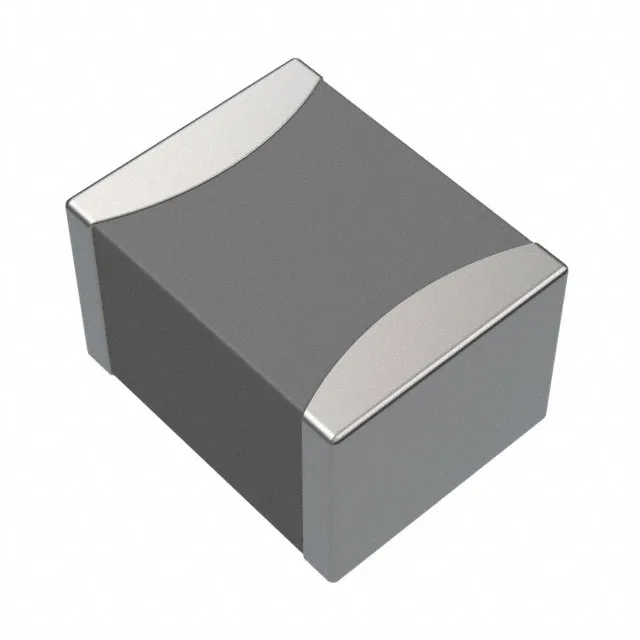
1.5 µH shielded power inductor for DC-DC input/output filtering
The Murata DFE322520FD-1R5M=P2 is a 1.5 µH shielded wirewound inductor built on a metal-alloy core, rated for 3.4 A continuous DC and saturating at 6 A. Its 31 mOhm max DCR keeps copper losses low enough that a 3.4 A load dissipates about 360 mW — well within the 1210 footprint's thermal budget for a 125 °C ambient. The metal core and full shield mean the stray field stays contained; adjacent traces on a tight layout won't couple noise into the inductor's own winding. This is the sort of part you drop onto a POL regulator output or a battery-line filter where both ripple current and radiated EMI matter.
Current rating and saturation headroom for transient loads
Continuous current is 3.4 A, but the saturation current is rated at 6 A — a 76 % margin above the DC rating. That headroom means a downstream switcher drawing 3 A steady-state can survive a 5 A load transient without the inductance collapsing and sending a current spike through the FETs. DCR of 31 mOhm max at 25 °C will climb with temperature (copper has a ~0.39 %/°C tempco), so at 125 °C ambient the effective DCR is roughly 43 mOhm. Budget the I²R loss at the hot-end operating temperature, not the 25 °C number, to avoid surprise derating in an under-hood ECU.
Rated AEC-Q200, which means it passed the full automotive passive-component stress suite: 1000 hours at 125 °C biased, moisture resistance, thermal shock, mechanical shock, and vibration per the AEC-Q200 rev D test plan.
1210 footprint and reflow profile
The metal core construction means the part can handle higher reflow peak temperatures than ferrite-core inductors — the core material won't crack or shift during lead-free soldering at 260 °C peak. Available on tape-and-reel in cut-tape quantities for prototypes or full reels for production. The ±20 % tolerance is typical for power inductors; the actual inductance at the operating current will shift down as the core approaches saturation, so design the control loop for the -20 % corner.