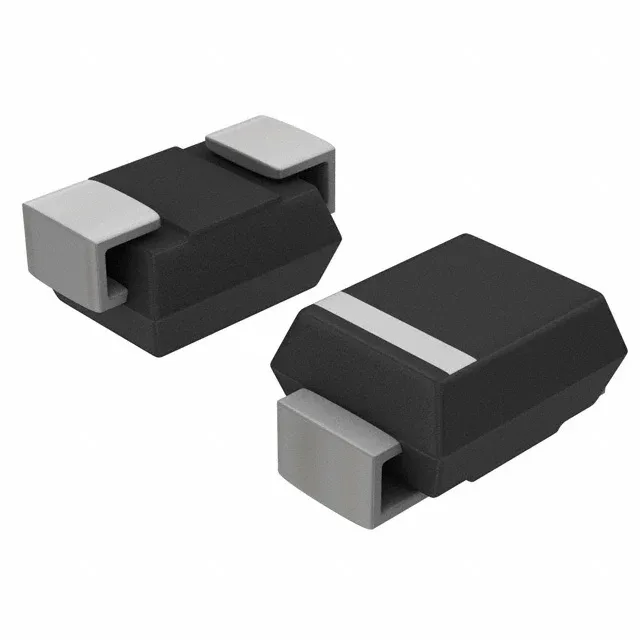
Microchip Technology SMCJ58E3/TR13 — Circuit Protection

SMCJ58E3/TR13 TVS Diode – 58V Standoff, 1500W, DO-214AB

MPNSMCJ58E3/TR13
Active

Microchip Technology SMCJ58E3/TR13, Zener TVS diode, 58V reverse standoff, 64.4V breakdown, 103V clamp, 1500W peak pulse, unidirectional, DO-214AB (SMC), surface mount, tape and reel.

$0.5550Ref. price · indicative, final on quote
Sourced new & surplus through independent channelsAuthenticity-screened · ESD-safe packingListing updated Aug 2026

Specifications

SMCJ58E3/TR13 specifications
ParameterValue
TypeZener
MountingSurface Mount
Voltage - breakdown64.4V
Voltage - clamping (Max) @ ipp103V
Voltage - reverse standoff58V
Current - peak pulse (10/1000μs)14.6A
Power - peak pulse1500W (1.5kW)
Power line protectionNo
Operating temperature-65°C~150°C(TJ)
PackageTape & Reel (TR)
ApplicationsGeneral Purpose
CaseDO-214AB, SMC
Unidirectional channels1

Product details

58V standoff, 1500W peak pulse in DO-214AB

Its 1500W peak pulse power rating handles surge events like inductive kickback or lightning-induced spikes common in industrial and telecom power supplies. The breakdown voltage window starts at 64.4V minimum, and the clamping voltage is capped at 103V at the peak pulse current of 14.6A. This gives a 39V margin above the standoff rail — enough to protect downstream 75V-rated MOSFETs or DC-DC converters without nuisance triggering on normal ripple.

Wide temperature range and package fit

Supplied in tape and reel (TR) format, the SMCJ58E3/TR13 suits automated assembly lines. The surface-mount package eliminates through-hole drilling, reducing board-layer count in dense designs.

As a standard catalog TVS diode, it is sourced through multiple distribution channels.

Frequently asked questions

What is the difference between SMCJ58E3/TR13 and SMCJ58A/TR13?

The SMCJ58E3/TR13 and SMCJ58A/TR13 are both 58V unidirectional TVS diodes in the same DO-214AB package. The primary difference is the breakdown voltage tolerance: the '' suffix typically indicates a tighter breakdown tolerance (often ±5%) compared to the 'A' suffix (standard ±5% or ±10% depending on the series). For exact parametric differences, refer to the datasheet for each suffix variant.