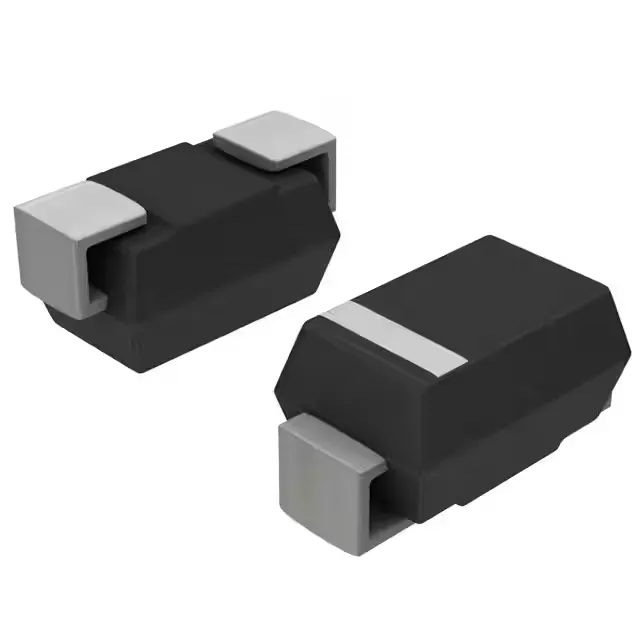
600 W peak pulse, 100 V breakdown — SMBJ90CE3/TR13
It protects a single line against transients in general-purpose applications, and the bidirectional construction means you can install it without worrying about polarity on AC or bipolar DC rails.
Breakdown voltage and clamping — the protection window
The reverse standoff voltage is 90 V typical, so the device stays transparent below that rail level. Once the transient exceeds 100 V (minimum breakdown), it starts conducting; the clamping voltage is held to 160 V maximum at the rated 3.8 A peak pulse current. That 100 V to 160 V window defines the protection margin for the downstream circuitry — if your rail is 90 V nominal, you have about 10 V of headroom before the TVS begins to shunt energy.
DO-214AA (SMB) — surface-mount footprint
The SMB footprint is common across many TVS families, so board layout reuse is straightforward. No power line protection feature is included — this is a general-purpose transient suppressor, not a dedicated rail clamp.