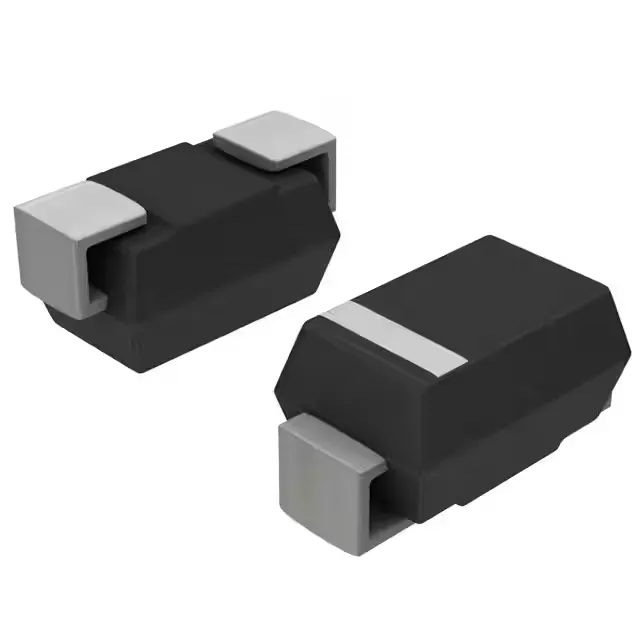
Microchip Technology SMBJ90CAE3/TR13 — Circuit Protection

SMBJ90CAE3/TR13 TVS Diode – 90V Bidirectional, 600W

MPNSMBJ90CAE3/TR13
Active

Bidirectional Zener TVS diode, Microchip Technology SMBJ90CAE3/TR13, 90V reverse standoff, 100V min breakdown, 146V clamp at 4.1A, 600W peak pulse, DO-214AA SMD.

$0.3000Ref. price · indicative, final on quote
Independent supplier — new & surplus stockAuthenticity-screened · ESD-safe packingListing updated Aug 2026

Specifications

SMBJ90CAE3/TR13 specifications
ParameterValue
TypeZener
MountingSurface Mount
Voltage - breakdown100V
Voltage - clamping (Max) @ ipp146V
Voltage - reverse standoff90V
Current - peak pulse (10/1000μs)4.1A
Power - peak pulse600W
Power line protectionNo
Operating temperature-65°C~150°C(TJ)
PackageTape & Reel (TR)
ApplicationsGeneral Purpose
CaseDO-214AA, SMB
Bidirectional channels1

Product details

90V bidirectional TVS in DO-214AA – surge protection for 48V–72V rails

It clamps transients to 146V at 4.1A peak pulse current, making it a fit for protecting 48V–72V DC rails in industrial power supplies, telecom rectifiers, and battery management systems.

The suffix in the order code indicates RoHS compliance and the standard Microchip green molding compound — no separate RoHS certificate is needed for this part number.

DO-214AA SMD – board layout and thermal considerations

The DO-214AA (SMB) package uses a JEDEC-standard footprint with the cathode tab as the main thermal path.

Frequently asked questions

How can I order SMBJ90CAE3/TR13 or check availability?

The SMBJ90CAE3/TR13 is an active Microchip part.

Is SMBJ90CAE3/TR13 RoHS compliant?

Yes, the suffix in the order code designates Microchip's RoHS-compliant, green molding compound. No separate RoHS certificate is required for this part number.

What is the difference between SMBJ90CAE3/TR13 and SMBJ90A?

The SMBJ90A is a unidirectional TVS (single-direction clamping), while the SMBJ90CAE3/TR13 is bidirectional — it clamps both positive and negative transients on the same line. The breakdown and clamping voltages are identical; the choice depends on whether the protected line carries a unipolar or bipolar signal.