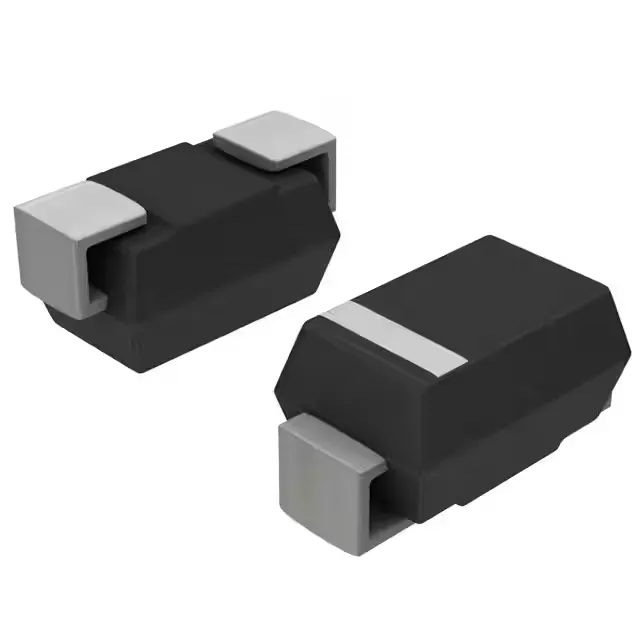
Microchip Technology SMBJ9.0AE3/TR13 — Circuit Protection

SMBJ9.0AE3/TR13 – Microchip 600W TVS, 9V Standoff, DO-214AA

MPNSMBJ9.0AE3/TR13
Active

Microchip Technology SMBJ9.0AE3/TR13, Zener TVS, 600W peak pulse power, 9V reverse standoff, 15.4V clamping, unidirectional, DO-214AA SMB package, Tape & Reel

$0.2850Ref. price · indicative, final on quote
Independent supplier — new & surplus stockAuthenticity-screened · ESD-safe packingListing updated Aug 2026

Specifications

SMBJ9.0AE3/TR13 specifications
ParameterValue
TypeZener
MountingSurface Mount
Voltage - breakdown10V
Voltage - clamping (Max) @ ipp15.4V
Voltage - reverse standoff9V
Current - peak pulse (10/1000μs)39A
Power - peak pulse600W
Power line protectionNo
Operating temperature-65°C~150°C(TJ)
PackageTape & Reel (TR)
ApplicationsGeneral Purpose
CaseDO-214AA, SMB
Unidirectional channels1

Product details

600W peak pulse, 9V rail clamp

Unidirectional, single-channel Zener TVS in the DO-214AA (SMB) surface-mount package. The 39A peak pulse current rating at the 10/1000 µs waveform gives the thermal mass to absorb repetitive surges from inductive loads or hot-plug events.

Temperature grade and board fit

Operating junction temperature range -65°C to 150°C covers military/aerospace cold-soak and under-hood automotive hot-soak conditions. The DO-214AA footprint is a common SMB pad layout — the same land pattern serves the full SMBJ family, so a BOM swap between voltage variants requires no board spin.

Frequently asked questions

What is the difference between SMBJ9.0AE3/TR13 and SMBJ9.0A?

Both share the same 600W peak pulse rating, 9V reverse standoff, and 15.4V clamping voltage. The SMBJ9.0AE3/TR13 carries the suffix, which indicates RoHS-compliant and halogen-free construction per Microchip's internal coding — the SMBJ9.0A may be an earlier or non- variant. Electrically they are identical; the suffix is the environmentally-compliant version.

Can SMBJ9.0AE3/TR13 be used for 5V supply protection?

No — the reverse standoff voltage is 9V, meaning the TVS starts conducting above 9V. For a 5V rail, the clamp voltage of 15.4V is too high to protect 5V-rated downstream components. Use a lower-voltage SMBJ variant (e.g., SMBJ5.0A) for 5V rails.