What the 78V standoff and 139V clamp mean for your rail
Its reverse standoff voltage of 78V matches the steady-state DC bus voltage, so the diode stays out of conduction during normal operation. That 139V ceiling is what the downstream circuitry must survive — if your load's absolute maximum rating sits below that, you need a lower-voltage TVS or additional protection.
600W peak pulse power — sizing the surge margin
Rated at 600W peak pulse power for the standard 10/1000µs waveform, this part handles moderate industrial transients — think inductive load switching or lightning-induced spikes on a 48V to 78V DC bus. The actual energy the diode absorbs depends on the surge duration and waveform; the 600W rating is a benchmark for comparing TVS diodes in the same package. For a given transient energy, a lower clamping voltage means higher peak current through the diode, so verify the 4.3A peak current rating against your source impedance and expected surge profile.
DO-214AA SMB package — hand-solderable and board-friendly
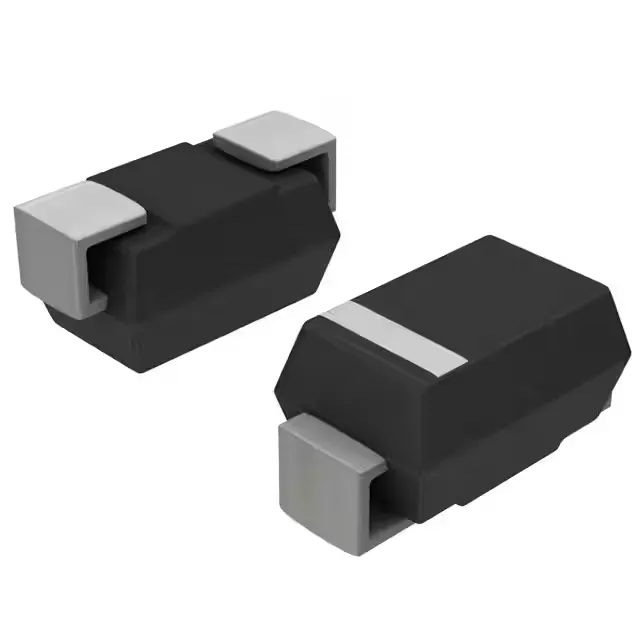
Housed in the DO-214AA (SMB) surface-mount package, the SMBJ78CE3/TR13 is a two-terminal device with a cathode tab that doubles as the thermal pad. The SMB footprint is large enough for hand soldering with a fine-tip iron or hot-air rework station — no stencil required for one-off prototypes.
No last-time-buy window or successor part has been announced.