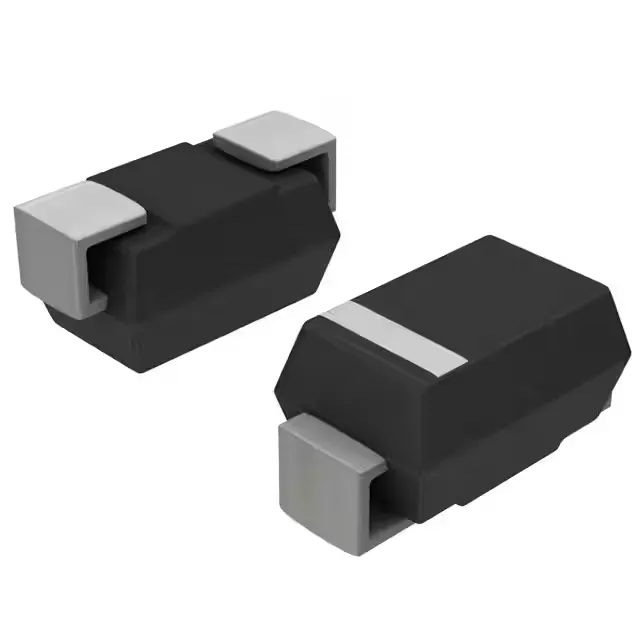
Microchip Technology SMBJ6.0CAE3/TR13 — Circuit Protection

SMBJ6.0CAE3/TR13 – Microchip 600W Bidirectional TVS Diode

MPNSMBJ6.0CAE3/TR13
Active

Microchip Technology SMBJ6.0CAE3/TR13, Zener TVS diode, 600W peak pulse power, 6V reverse standoff, 10.3V clamping, single bidirectional channel, surface-mount DO-214AA (SMB) package on tape and reel.

$0.3000Ref. price · indicative, final on quote
Independent supplier — new & surplus stockAuthenticity-screened · ESD-safe packingListing updated Aug 2026

Specifications

SMBJ6.0CAE3/TR13 specifications
ParameterValue
TypeZener
MountingSurface Mount
Voltage - breakdown6.67V
Voltage - clamping (Max) @ ipp10.3V
Voltage - reverse standoff6V
Current - peak pulse (10/1000μs)58.3A
Power - peak pulse600W
Power line protectionNo
Operating temperature-65°C~150°C(TJ)
PackageTape & Reel (TR)
ApplicationsGeneral Purpose
CaseDO-214AA, SMB
Bidirectional channels1

Product details

It clamps at 10.3 V maximum when the surge current reaches 58.3 A, with a reverse standoff voltage of 6 V. A single bidirectional channel handles AC or dual-polarity signal lines without needing two diodes back-to-back, which simplifies PCB layout and reduces component count.

Housed in the DO-214AA surface-mount package, the device operates across -65°C to 150°C junction temperature.

The base product number SMBJ6.0 covers a broad family, so long-term supply continuity is typical for this line.

Frequently asked questions

What does the suffix in SMBJ6.0CAE3/TR13 mean?

The suffix is Microchip's designation for lead-free / RoHS-compliant plating finish. It does not affect electrical performance — the breakdown, clamping, and power ratings are identical to the standard SMBJ6.0CA part.

Is SMBJ6.0CAE3/TR13 bidirectional?

Yes, it is a single bidirectional channel. It clamps equally on positive and negative transients, making it suitable for AC signal lines or power rails that swing below ground.

Can SMBJ6.0CAE3/TR13 replace SMBJ6.0A?

The SMBJ6.0A is a unidirectional version; the SMBJ6.0CAE3/TR13 is bidirectional. Electrically, the breakdown and clamping voltages are the same, but the bidirectional part conducts in both directions. If the original design used a unidirectional TVS on a DC rail, replacing it with a bidirectional part may still protect the rail but will not provide the same polarity-specific clamping characteristic. Confirm the circuit topology before substituting.