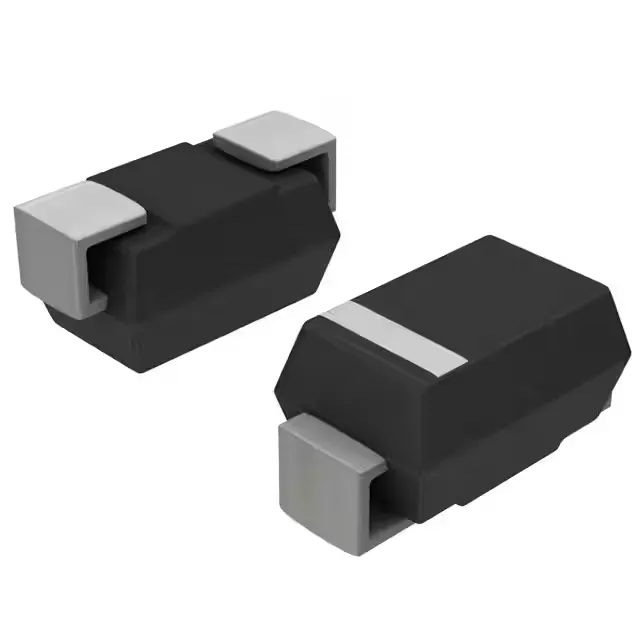
What this TVS does on your rail
That's the DC bus voltage it can sit across without conducting — choose it for 48V nominal rails or 54V max continuous lines where the clamping ceiling must stay below 100V. Peak pulse power is 600W for a 10/1000µs waveform, and the clamping voltage at that surge current is 96.3V max. The 6.2A peak pulse current rating tells you the surge energy the part can absorb before the junction fails — derate for ambient temperature above 25°C per the datasheet curve. That range covers outdoor telecom cabinets, engine-bay electronics, and downhole instrumentation where a commercial-grade TVS would leak or fail.
Package, mounting, and sourcing posture
The bidirectional channel is a single die in this two-terminal package — no polarity concern during placement. Lifecycle status is Active, meaning Microchip continues to manufacture this part with no announced end-of-life.
The 54V reverse standoff is the continuous voltage the TVS sees — a 48V nominal rail with 10% tolerance peaks at 52.8V, leaving 1.2V margin before the device starts conducting leakage current. The 60V minimum breakdown voltage gives a 7.2V window above the rail peak for normal operation. Clamping at 96.3V means the downstream components on that rail must be rated for at least 100V to survive a surge. If your 48V rail feeds a 100V-capable DC-DC converter or a 100V-rated MOSFET, this TVS fits. If the downstream parts are 80V-rated, you need a lower-clamping TVS or a different rail architecture. Power line protection is marked 'No' — this is a unidirectional or bidirectional Zener TVS, not a crowbar or series-protection device. It clamps transients to ground; it does not limit continuous overvoltage.