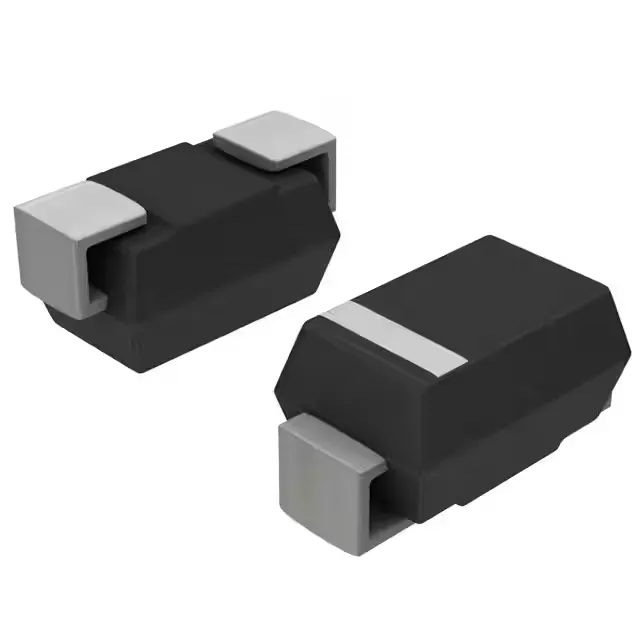
Its 82.4 V maximum clamping voltage at 7.3 A peak pulse current sets the upper voltage limit the protected circuitry must survive.
Clamping voltage and peak pulse current — sizing the protection margin
The reverse standoff voltage is 51 V, meaning the diode does not conduct appreciably below that level. Breakdown occurs at a minimum of 56.7 V, and the clamping voltage peaks at 82.4 V when the full 7.3 A pulse flows. For a 48 V nominal bus with a 10 % tolerance, the 51 V standoff provides a 3 V headroom before the diode starts to leak — tight but workable if the rail is regulated. The 7.3 A peak pulse current is the maximum the diode can handle in the 10/1000 µs waveform; a higher surge requires a larger TVS or a parallel protection path. The 600 W peak pulse power is the product of clamping voltage and peak current at the specified pulse condition. Derating for temperature above 25°C is standard for this class — the datasheet curve shows the power linearly reduces to zero at 150°C. If the ambient at the diode exceeds 85°C, the effective pulse-handling drops, so the buyer should check the derating factor against the expected surge energy.