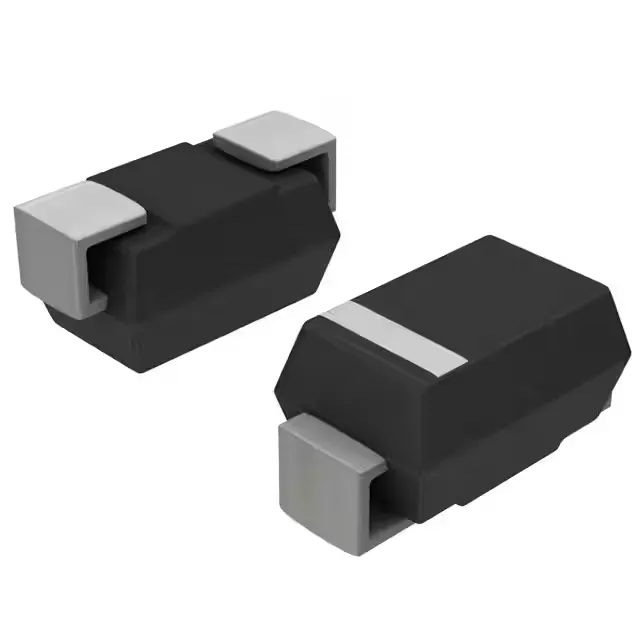
When a transient exceeds 189V breakdown, it clamps at 304V max and shunts up to 2A of surge current (10/1000µs waveform). That 600W peak pulse rating tells you the energy it can absorb before the junction gives way; derate it for ambient above 25°C per the datasheet curve.
Clamping voltage and the rail it saves
The 304V clamp at 2A is the ceiling the protected rail sees during a surge. If your downstream device has an absolute max of, say, 300V, this part will not hold — you need a lower-voltage TVS or a multi-stage clamp. The 189V minimum breakdown means the part starts conducting well before the clamp, so a 170V rail with 10% tolerance is safe; a 180V rail risks nuisance triggering.
Active production — no last-time-buy rush
Microchip lists the SMBJ170E3/TR13 as Active.
Temperature range and bench reality
That 150°C ceiling is the die temperature, not the case — in a 85°C ambient with no airflow, the junction will run hotter, and the 600W peak pulse derates to roughly 400W at 100°C. For a board-level repair bench, the scorch mark on a failed TVS is usually at the package body, not the junction; if the SMBJ170E3/TR13 is the part that actually died, check the upstream series resistance before swapping.