What the 21.5V clamp means for your 13V rail
When a surge hits, the diode breaks down at a minimum of 14.4V and clamps the voltage to a maximum of 21.5V while conducting 27.9A of peak pulse current (10/1000µs waveform). That 21.5V ceiling is the number your downstream components must survive — if your 13V rail feeds a regulator rated for 20V absolute max, this clamp is too tight; you need a lower-clamping part.
600W peak pulse — sizing the protection margin
For a 13V rail, a typical 600W TVS can handle a 27.9A surge before the junction temperature exceeds the -65°C to 150°C operating range. If your application sees repetitive surges or longer pulse widths, derate the peak power per the datasheet curve — the 600W figure is for a single pulse at 25°C.
DO-214AA footprint — board-level fit check
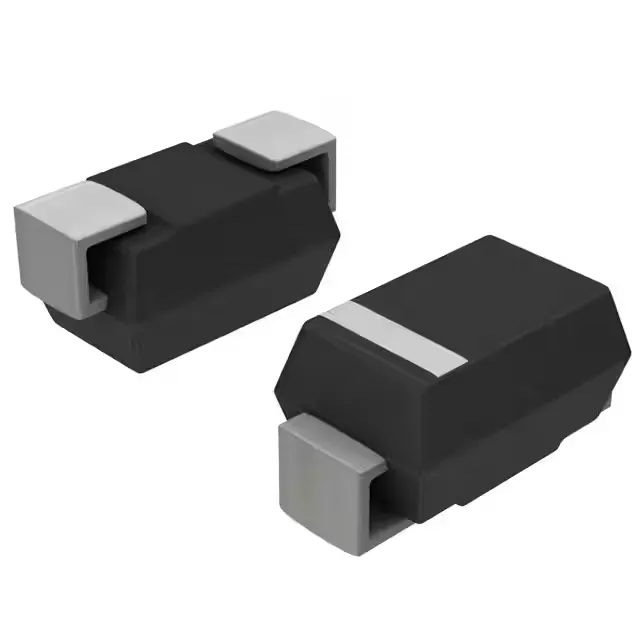
The package is DO-214AA (SMB), a common surface-mount footprint for TVS diodes in the 600W class. If your existing PCB has a DO-214AA land pattern, this part drops in without layout changes. Confirm the pad dimensions against the Microchip datasheet — the SMB package has a typical body width of 3.6 mm and length of 4.6 mm.