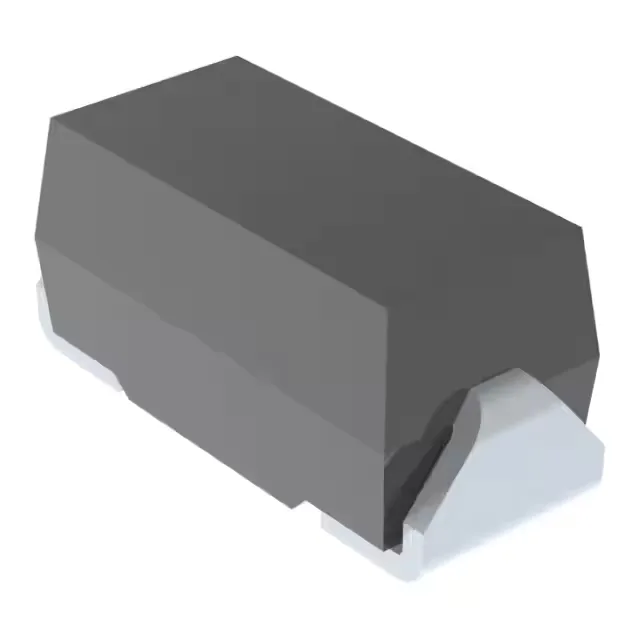
Microchip Technology SMAJ8.0E3/TR13 — Circuit Protection

SMAJ8.0E3/TR13 TVS Diode – 500W, 8V Standoff, DO-214AC

MPNSMAJ8.0E3/TR13
Active

Microchip Technology SMAJ8.0E3/TR13, Zener TVS diode, 500W peak pulse power, 8V reverse standoff, 15V clamp at 33.3A, unidirectional, DO-214AC (SMA) surface mount package.

$0.1800Ref. price · indicative, final on quote
Sourced new & surplus through independent channelsAuthenticity-screened · ESD-safe packingListing updated Aug 2026

Specifications

SMAJ8.0E3/TR13 specifications
ParameterValue
TypeZener
MountingSurface Mount
Voltage - breakdown8.89V
Voltage - clamping (Max) @ ipp15V
Voltage - reverse standoff8V
Current - peak pulse (10/1000μs)33.3A
Power - peak pulse500W
Power line protectionNo
Operating temperature-65°C~150°C(TJ)
PackageTape & Reel (TR)
ApplicationsGeneral Purpose
CaseDO-214AC, SMA
Unidirectional channels1

Product details

What this part does on the board

The 8V reverse standoff voltage means the diode stays off below 8V, so it won't load your supply during normal operation. When a transient pushes the line above 8.89V (minimum breakdown), it starts conducting and holds the clamp at 15V max — that's the protection window you size your downstream circuitry to survive.

Housed in a DO-214AC (SMA) surface-mount package, the same footprint as standard SOD-123W or SMB variants. The SMA body is large enough to hand-solder with a fine-tip iron or hot-air station without cooking the board — the cathode band is clearly marked, so orientation is straightforward under a loupe. If you are reworking a board that saw a transient event, the diode itself may have degraded — replace it rather than reusing it.

No stock-holding claim on this page.

Frequently asked questions

What are the key electrical specifications of SMAJ8.0E3/TR13?

Operating junction temperature range is -65°C to 150°C.

How do I test this TVS diode for functionality on the bench?

With a multimeter in diode mode, you should read a forward voltage drop across the junction (typically 0.6V–0.8V) when the anode is negative relative to the cathode. In reverse bias, it will read open until you exceed the breakdown voltage — do not apply more than 8.89V during a simple go/no-go check. A curve tracer or TVS tester is better for verifying the clamping characteristic.