What the 60V reverse standoff means for your rail protection
Above that, it clamps transients at 96.8V maximum, protecting downstream components on a 48V or 60V bus from surges.
Clamp voltage and peak current — sizing the protection margin
The clamping voltage of 96.8V at a peak pulse current of 5.2A sets the upper voltage stress the protected circuit sees. If your downstream MOSFET or IC has a maximum rating below 96.8V, this TVS may not protect it — you need a lower-voltage clamp or a higher-energy TVS. Breakdown voltage minimum is 66.7V, so the device starts conducting between 66.7V and the clamp voltage. That leaves a ~30V window from the 60V operating rail to full clamp — enough margin for most 48V or 60V systems.
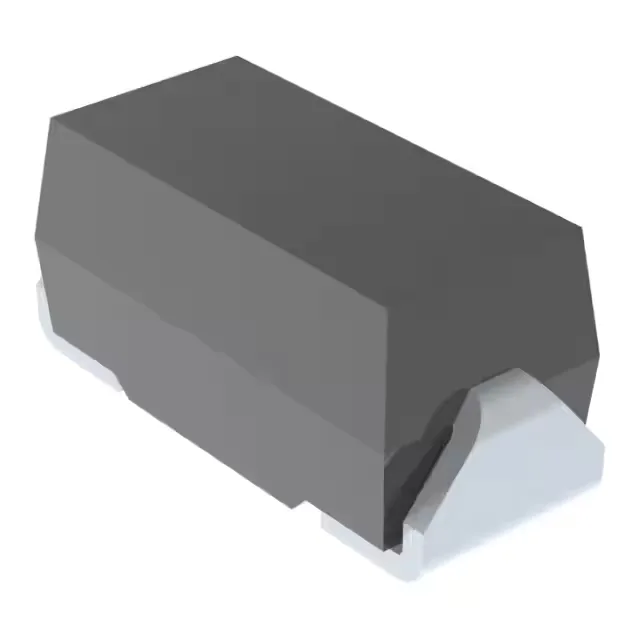
The DO-214AC (SMA) footprint is common and fits existing PCB layouts for 500W TVS diodes in this power class.
Operating temperature range and environment
Rated for junction temperature from -65°C to 150°C, this TVS suits equipment exposed to extreme thermal cycling — outdoor telecom cabinets, industrial motor drives, or engine-bay electronics. Surface-mount DO-214AC (SMA) package with a low profile suits dense PCB layouts. No power line protection feature — this is a general-purpose transient suppressor, not a crowbar or foldback device.