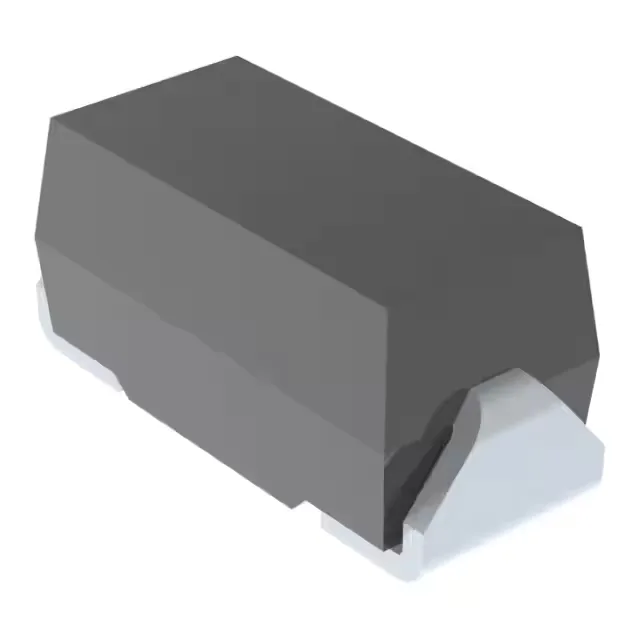
The SMAJ40CAE3/TR13 is a Zener-type bidirectional TVS diode from Microchip's SMAJ family, rated for 500W peak pulse power at 10/1000µs waveform. It clamps a 40V nominal rail to 64.5V maximum at 7.8A peak pulse current, making it a direct fit for general-purpose overvoltage protection on 40V DC buses, 24VAC secondary rectified lines, or automotive load-dump scenarios where the steady-state voltage stays under 40V. That saves board space and BOM count on signal lines or power inputs that see surges of either polarity.
The 64.5V clamping voltage at 7.8A is the ceiling the protected circuit sees during a 10/1000µs surge. If your downstream components (DC-DC converter input, relay coil, sensor supply) have an absolute maximum rating below 64.5V, this TVS will not protect them — the rail will exceed their breakdown before the TVS clamps. For a 40V nominal rail, 64.5V clamp is typical and leaves margin for 50V-rated parts. The 500W peak pulse power rating is the product of clamp voltage and peak current at the specified waveform. Actual power dissipation in a real transient depends on pulse width and duty cycle — the 10/1000µs waveform is the standard telecom surge shape. For shorter pulses (8/20µs), the peak current capability is higher; for longer pulses, derate per the datasheet curve.
Lifecycle and production status — still active, no EOL signal
Package and mounting — DO-214AC (SMA) footprint
Surface-mount DO-214AC (SMA) package, 0.50 mm pitch between the anode and cathode pads. The cathode is marked with a band on the body; for a bidirectional device, both polarities clamp, so orientation matters only for the marking — the electrical function is symmetric. Standard reflow profile per JEDEC J-STD-020, peak temperature 260°C. The lower limit covers cold-soak in outdoor or aerospace environments; the upper limit keeps the TVS functional under sustained high ambient or self-heating during repetitive surges. Storage temperature matches the operating range, so the reels can sit in a non-climate-controlled storeroom without issue.