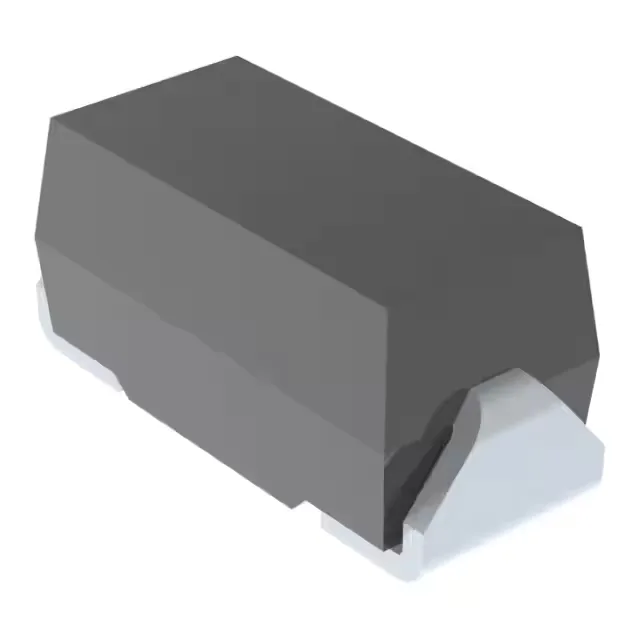
Its 22.2V minimum breakdown voltage means it starts conducting just above the 20V reverse standoff, and the 35.8V clamping voltage limits the spike seen by the protected load.
Key ratings that drive the BOM decision
The 20V reverse standoff matches a 20V DC bus or a 12V-to-20V converter output — the TVS sits across the rail and stays off until a transient exceeds that level. The 22.2V minimum breakdown gives a 2.2V margin above the rail, enough to avoid nuisance clamping from normal ripple. The 35.8V clamping voltage at 13.9A peak pulse current is the worst-case voltage the downstream components must survive; a 40V-rated capacitor or IC on that rail has adequate headroom. The single bidirectional channel means one device protects both polarities on a signal pair or a DC rail that sees reverse transients.
The DO-214AC (SMA) package is a widely used footprint shared across many TVS families, making second-sourcing straightforward if a BOM alternative is needed later.