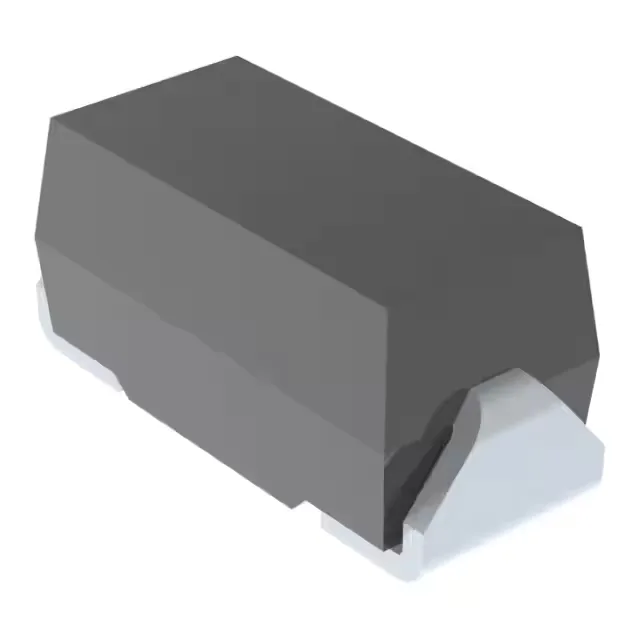
What this TVS diode protects and how it clamps
Its 14.4V minimum breakdown voltage ensures the device stays off during normal operation, while the 23.8V maximum clamping voltage at 21A limits the spike seen by downstream components during a surge event.
Key ratings for rail selection and surge margin
Reverse standoff voltage is 13V — choose this part for a nominal 12V or 13V supply where the maximum DC operating voltage stays below that threshold. Breakdown occurs at a minimum of 14.4V, providing a guard band of roughly 1.4V above the standoff before avalanche conduction begins. Clamping voltage maxes at 23.8V when the diode conducts 21A peak pulse current. That clamp figure determines the voltage stress on a protected IC's absolute maximum rating — ensure the protected device's max rating exceeds 23.8V with margin. Operating junction temperature spans -65°C to 150°C, making this TVS suitable for environments with wide thermal swings — engine bay, outdoor telecom cabinets, or industrial enclosures where ambient can exceed 85°C. No power line protection means it is not intended for AC mains surge suppression.