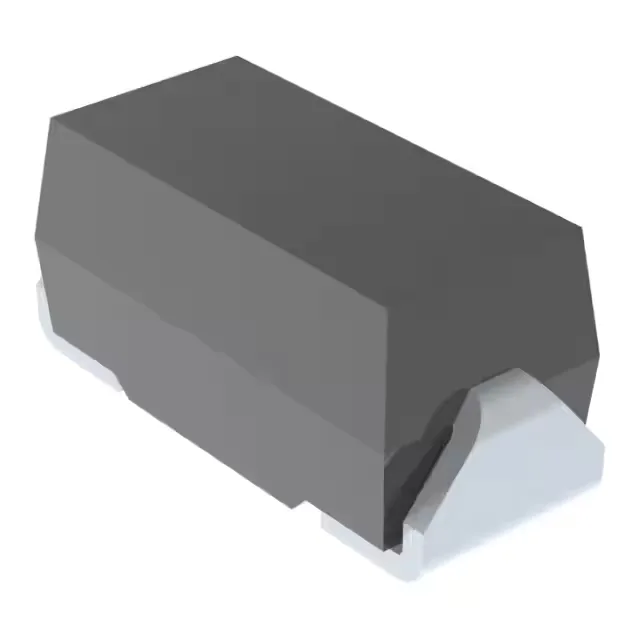
Microchip Technology SMAJ120E3/TR13 — Circuit Protection

SMAJ120E3/TR13 Zener TVS, 500W, 120V Standoff, DO-214AC

MPNSMAJ120E3/TR13
Active

Microchip Technology SMAJ120E3/TR13, Zener TVS diode, 500W peak pulse power, 120V reverse standoff (Typ), DO-214AC (SMA) package, Tape & Reel

$0.1800Ref. price · indicative, final on quote
Sourced new & surplus through independent channelsAuthenticity-screened · ESD-safe packingListing updated Aug 2026

Specifications

SMAJ120E3/TR13 specifications
ParameterValue
TypeZener
MountingSurface Mount
Voltage - breakdown133V
Voltage - clamping (Max) @ ipp214V
Voltage - reverse standoff120V
Current - peak pulse (10/1000μs)2.3A
Power - peak pulse500W
Power line protectionNo
Operating temperature-65°C~150°C(TJ)
PackageTape & Reel (TR)
ApplicationsGeneral Purpose
CaseDO-214AC, SMA
Unidirectional channels1

Product details

Surge clamp for 120 V rails

Its 500 W peak pulse power rating (10/1000 µs waveform) means it can absorb a 2.3 A surge before the clamping voltage hits 214 V max — enough for most industrial and telecom secondary-side protection.

Standoff voltage and clamping ceiling

The 120 V reverse standoff voltage is the DC bus level the diode sees during normal operation — it will not conduct until the breakdown threshold of 133 V min is crossed. The clamping voltage of 214 V max at the peak pulse current tells you the maximum voltage the downstream circuitry will see during a surge event. That 214 V ceiling is the number to compare against your load's absolute maximum rating.

That means the BOM position is not at risk of a sudden last-time-buy scramble. The suffix typically indicates lead-free / RoHS-compliant finish, though the evidence does not carry an explicit RoHS statement — confirm with the datasheet if your process requires a formal declaration.

Frequently asked questions

What is the peak pulse power rating of the SMAJ120E3/TR13?

500 W peak pulse power per the 10/1000 µs waveform. That rating assumes the device is mounted on a standard copper pad area — the actual power-handling depends on the PCB thermal mass.