72 MHz MIPS32 M4K — what the clock buys you
The PIC32MX154F128B-V/SO runs a MIPS32 M4K core at 72 MHz, which puts it in the sweet spot for automotive sensor fusion and CAN gateway nodes where you need more throughput than an 8-bit PIC but don't want the power budget of a 200 MHz part.
AEC-Q100 and the -V suffix — why it matters for the BOM
That 105°C ceiling is the difference between a part that survives under-hood ambient and one that derates in a hot engine bay. The commercial -I suffix part (PIC32MX154F128B-I/SO) is only rated to 85°C, so if your BOM calls for the -V, don't substitute the -I without a thermal analysis — the silicon is the same, but the test and screening flow is different.
28-SOIC — rework and footprint realities
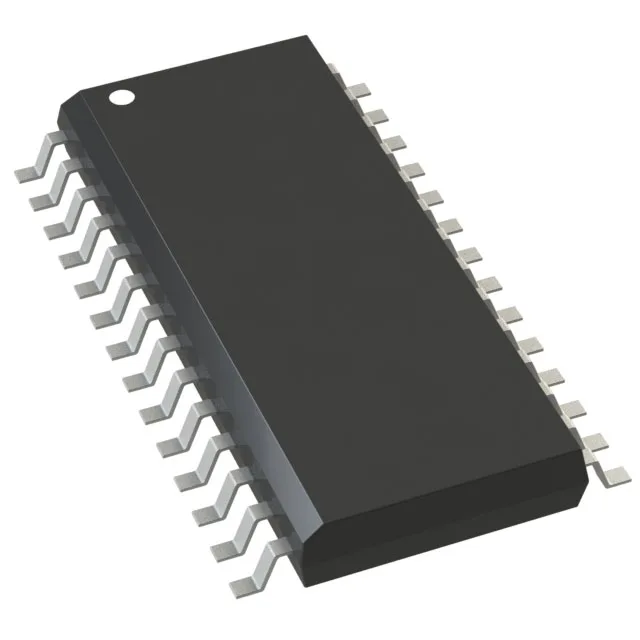
The 28-SOIC (7.50 mm body width) is a rework-friendly package — the gull-wing leads are visible for inspection and the 1.27 mm pitch gives you room to route traces between pads on a two-layer board. The 21 I/O count means you're not breaking out every peripheral simultaneously — plan your pin mux allocation early, because the I²S and PWM functions share pins with the UART and SPI modules.
Peripheral set — what's on the bus
On-chip peripherals include Brown-out Detect/Reset, DMA, HLVD (High/Low Voltage Detect), I²S, POR, PWM, and WDT. Connectivity covers I²C, IrDA, LINbus, PMP, SPI, and UART/USART. The 10-channel 10-bit ADC is adequate for reading analog sensors like thermistors or potentiometers, but if you need 12-bit resolution or more channels, you'll be looking at the PIC32MX130F128L variant with its 48-channel ADC.