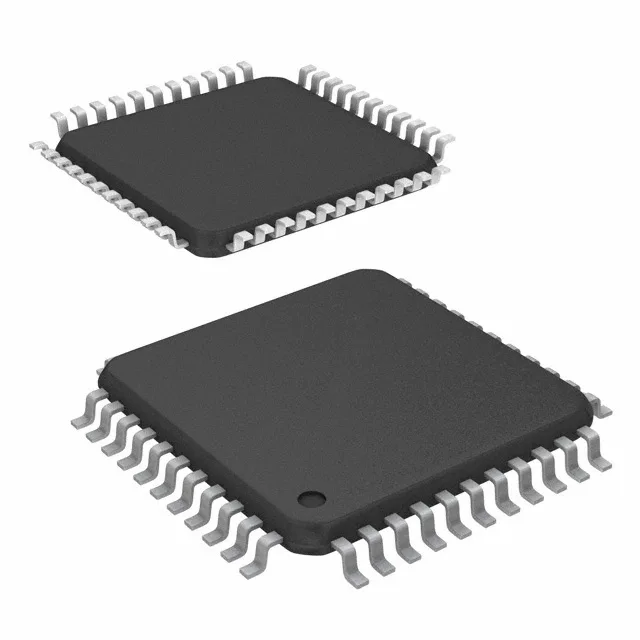
Microchip Technology PIC16F877-04I/PT — Microcontrollers & Processors (MCU / MPU / DSP)

PIC16F877-04I/PT MCU, 8-bit PIC, 4 MHz, 14 KB Flash, 44-TQFP

MPNPIC16F877-04I/PT
Active

Microchip PIC® 16F series PIC16F877-04I/PT, 8-bit PIC MCU, 4MHz, 14KB Flash, 368 x 8 RAM, 256 x 8 EEPROM, 33 I/O, I2C/SPI/UART, 8x10b ADC, 44-TQFP, -40 to 85°C, 4V to 5.5V.

$10.5000Ref. price · indicative, final on quote
Packaging44-TQFP
RoHSROHS3 Compliant
SeriesPIC® 16F
Independent supplier — new & surplus stockAuthenticity-screened · ESD-safe packingListing updated Jul 2026

Specifications

PIC16F877-04I/PT specifications
ParameterValue
SeriesPIC® 16F
MountingSurface Mount
Oscillator typeExternal
Program memory typeFLASH
Voltage - supply (Vcc (Vdd))4V ~ 5.5V
Operating temperature-40°C ~ 85°C (TA)
Speed4MHz
PackageTray
RAM size368 x 8
Core size8-Bit
EEPROM size256 x 8
PeripheralsBrown-out Detect/Reset, POR, PWM, WDT
ConnectivityI2C, SPI, UART/USART
Number of i (O)33
Core processorPIC
Case44-TQFP
Data convertersA/D 8x10b
Program memory size14KB (8K x 14)

Product details

8-bit PIC at 4 MHz — what you're getting

The Microchip PIC16F877-04I/PT is a mid-range 8-bit PIC MCU in the PIC® 16F family, clocked at 4 MHz with 14 KB (8K x 14) Flash program memory, 368 x 8 bytes of RAM, and 256 x 8 bytes of EEPROM. It runs on a 4V to 5.5V supply rail — a 5V-only part, not 3.3V — and comes in a 44-TQFP (10x10 mm) surface-mount package with 33 I/O lines.

Peripherals and connectivity — what the 33 I/O bring

On-chip peripherals include brown-out detect and reset (BOR/POR), a PWM module, and a watchdog timer (WDT). With 33 I/O, it can drive a 7-segment multiplexed display plus a keypad matrix while leaving serial lines free.

Memory sizing — 14 KB Flash, 368 bytes RAM, 256 bytes EEPROM

Program memory is 14 KB Flash (8K x 14-bit words). That's enough for a moderate control loop with a serial protocol stack and a lookup table, but tight for a full TCP/IP or USB stack. RAM at 368 bytes limits buffered data handling — expect to manage UART/SPI buffers carefully if you're streaming more than a few hundred bytes. The 256 bytes of EEPROM are useful for calibration constants, serial numbers, or configuration parameters that survive power cycles without wear-leveling concerns. Each byte is rated for typical 1M erase/write cycles.

Not AEC-Q100 qualified, so skip it for safety-critical automotive or mil-spec programs.

Lifecycle and sourcing status

Microchip lists the PIC16F877-04I/PT as Active product status. Production continues through Microchip's authorized distribution channel. ROHS3 compliant per the listing. The 44-TQFP package is MSL 3 — standard moisture sensitivity, bake before reflow if the sealed bag has been open beyond the floor-life window.

Frequently asked questions

What is the equivalent part for PIC16F877-04I/PT?

There is no pin-compatible second-source from another manufacturer. Within Microchip's own lineup, the PIC16F877A is the enhanced mid-range successor with the same pinout and package options, running at up to 20 MHz. The PIC16LF1559-I/SS is a lower-voltage (1.8V) 8-bit alternative but has fewer I/O (17) and a different package (SSOP-20). Neither is a drop-in replacement without board changes.

Can PIC16F877-04I/PT be programmed with PICkit 3?

Yes, the PICkit 3 supports the PIC16F877 family. It uses the standard ICSP interface (PGC/PGD on pins 39 and 40) plus VPP/MCLR on pin 1. The 4 MHz external oscillator is required — there's no internal oscillator on this variant, so a crystal or clock source must be present on the target board for programming and normal operation.

What is the difference between PIC16F877-04I/PT and PIC16F877A?

The PIC16F877A is the enhanced mid-range version of the same base design. It runs at up to 20 MHz (vs 4 MHz), includes an internal oscillator (this part requires an external clock), and adds a few enhanced instructions. Both are 44-TQFP, 33 I/O, same peripheral set. The 877A is the recommended choice for new designs; the 877-04I is the legacy speed-binned variant.