PIC16F84A-20/SO
Microchip Technology
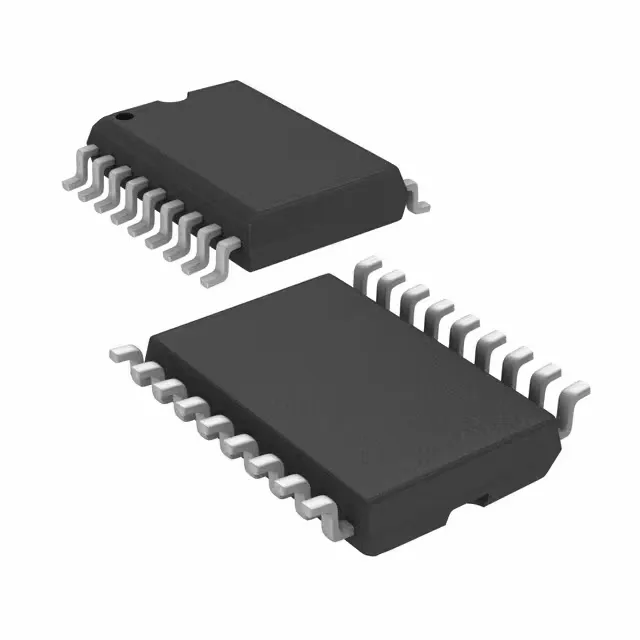
MOQ 1 · Tube · RoHS · EIA-481 · DAP/DDP · T/T
Technical specifications
| Parameter / Attribute | Specification / Value |
|---|---|
| Series | PIC® 16F |
| Mounting | Surface Mount |
| Oscillator type | External |
| Program memory type | FLASH |
| Voltage - supply (Vcc (Vdd)) | 4V ~ 5.5V |
| Operating temperature | 0°C~70°C(TA) |
| Speed | 20MHz |
| Package | Tube |
| RAM size | 68 x 8 |
| Core size | 8-Bit |
| EEPROM size | 64 x 8 |
| Peripherals | POR, WDT |
| Number of i (O) | 13 |
| Core processor | PIC |
| Case | 18-SOIC (0.295\", 7.50mm Width) |
| Program memory size | 1.75KB (1K x 14) |
Need Stock or a Drop-in Second-Source for PIC16F84A-20/SO?
Package: PDIP-18 / SOIC-18 · Pin-compatible replacements with immediate Shenzhen spot stock
The PIC16F84A is the microcontroller that taught a generation of designs: an 18-pin workhorse in chargers, timers, industrial retrofits and ten thousand hobby classics, still demanded by field repairs long after new designs moved on. Its living successor is the PIC16F628A - the same 18-pin footprint, a factory-calibrated internal 4MHz oscillator the original never had, USART, PWM and twice the program memory - requiring exactly two kinds of work: two firmware lines that every migration guide names (comparators off, bank layout), and hardware that mostly stays put. Buying this part in 2026 means the aftermarket: date codes, pulls and re-marked stock are the sourcing question, not availability on paper.
Verified Pin-Compatible Replacements (3 verified alternatives)
The Documented Successor - Same 18 Pins
Shenzhen Spot Stock (24-48h Dispatch)
Pin-for-pin the same 18-pin body with the crystal staying on RA6/RA7 if the design uses one - plus a 4MHz internal oscillator the 16F84A never had, USART, CCP/PWM and two extra timers for free.
2V to 5.5V operating range against the older part narrow window - the supply side is a relaxation, not a risk.
The Four-Times-Memory Branch
Shenzhen Spot Stock (24-48h Dispatch)
The same 628A architecture with 4K words of program memory - the branch to take when a rescued 16F84A program already overflowed the 1K original and the 2K of the plain 628A.
Same 2V to 5.5V operating envelope.
The 1K Cost-Down Member
Shenzhen Spot Stock (24-48h Dispatch)
The smallest member of the same 18-pin line at 1K words of program memory - the drop-in for programs that never outgrew the original 16F84A code space.
Same 2V to 5.5V envelope and the same peripherals set.
Buyer & Quality Checklist for Sourcing Alternatives
- Hardware stays, firmware moves: the 16F628A line is pin-for-pin in the 18-pin body with the crystal untouched - all the migration work lives in two lines of init and a bank-layout audit.
- The first line of every successful migration: CMCON = 0x07. Without it, RA0-RA3 power up as comparator inputs, and a port that reads as if it stopped working is the most common 84-to-628 support thread in existence.
- Bank arithmetic changed: general-purpose RAM starts at 0x20 instead of 0x0C, EEADR and EEDATA moved to Bank 1, and EEIE and EEIF moved to PIE1 and PIR1 - registers are not mirrored, so interrupt routines written for the 16F84A addressing style break silently.
- Config fuses to revisit: _LVP_OFF frees RB4 (the programming-voltage pin), and BOD settings deserve the same explicit choice the original design never had to make.
- The internal 4MHz oscillator is an option: with a crystal fitted, configure XT/HS exactly as the old design did - the new clock source does not grab the pins unless told to.
- Sourcing in the aftermarket era: the 16F84A is a repair-market part now, and pulls and re-marked stock circulate. Date codes, packaging photos and a program-and-verify step on receipt are the discipline - we ship photos before dispatch for exactly this class.
Frequently Asked Technical Questions
Q: Can a PIC16F628A directly replace a PIC16F84A?
A: Hardware yes - same 18-pin footprint, same crystal pins - software no: the program must be recompiled with CMCON = 0x07, corrected bank and RAM assumptions, and updated config fuses. It is a documented migration, not a hex swap.
Q: Why do RA0 to RA3 read wrong after migrating a 16F84A program?
A: Because on the 16F628A those pins power up as comparator inputs. Setting CMCON = 0x07 in initialization switches them to digital I/O - this one line fixes the classic migration symptom.
Q: Is the PIC16F84A still in production?
A: It has been superseded for new designs for years and lives now in legacy equipment and aftermarket stock - which is exactly the channel where date codes and provenance matter. The 627A/628A/648A line is the production path.