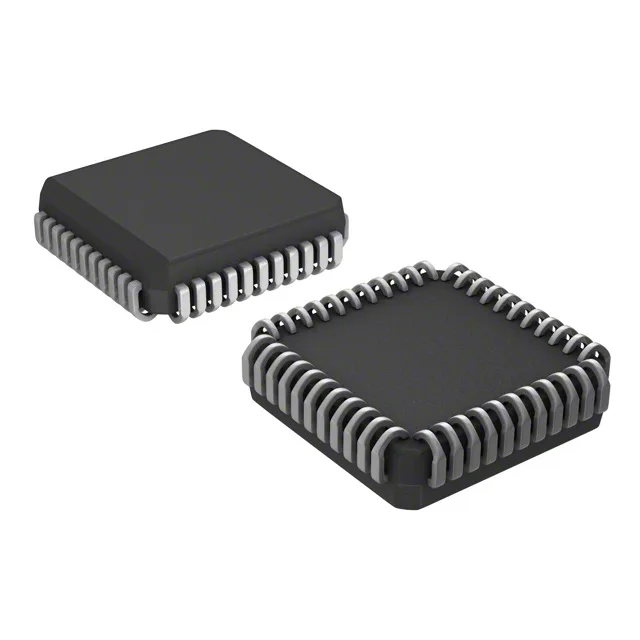
The Microchip PIC16F74T-I/L is an 8-bit PIC® 16F MCU clocked at 20 MHz, with 7 KB (4K x 14) Flash program memory and 192 x 8 bytes of RAM. The 44-PLCC J-Lead package (16.59 x 16.59 mm) is a through-hole-solderable surface-mount footprint — less common than QFP, but socketable for prototyping and field upgrades.
7 KB Flash and 192-byte RAM — sizing the firmware envelope
With 7 KB program memory, the PIC16F74T-I/L handles medium-complexity firmware — state machines, PID loops, Modbus RTU slaves, or simple bootloaders. The 192-byte RAM is the binding constraint: avoid heavy stack usage, large lookup tables, or double-buffered data paths. If your application needs more than 128 bytes of runtime variables, budget the RAM or move to a 16-bit PIC24F part with larger SRAM.
Active lifecycle — no EOL risk on this line
For dual-sourcing resilience, the PIC16LF1559-I/SS is a lower-voltage (1.8 V) 8-bit sibling in a 20-pin SSOP — not a pin-compatible drop-in, but a functional alternative if the 5 V rail and 44-pin footprint are negotiable.
Tape-and-reel vs. tube — what the T suffix means
The base part PIC16F74-I/L ships in tubes. Electrically and functionally they are identical; the only difference is the shipping medium. If your line feeds from tube magazines, order the non-T variant. If you need Cut Tape for prototyping, the T suffix covers that too.