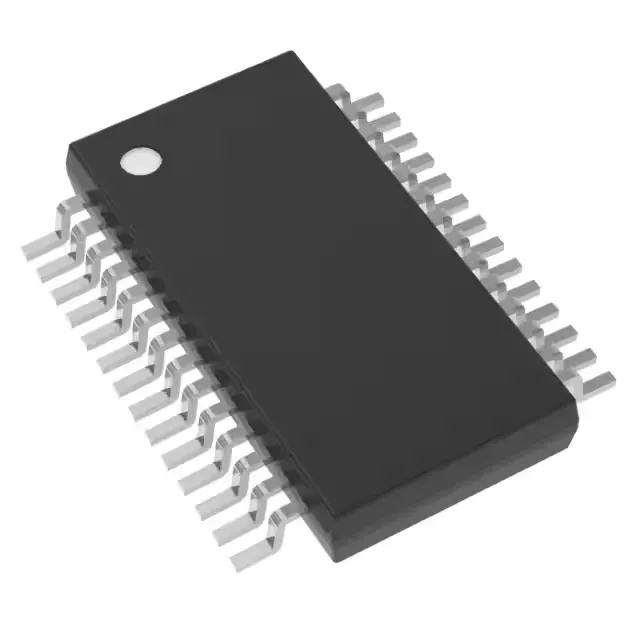
The PIC16F73T-I/SS: The 20 MHz clock is the ceiling for instruction throughput; at one instruction per four clock cycles (typical for PIC), you get about 5 MIPS. That is enough for control loops, UART polling, and PWM generation, but not for heavy DSP or high-speed data logging. The supply range is 4V to 5.5V — this is a 5V-logic part, not a 3.3V or 1.8V device. If your board already runs a 5V rail, this MCU drops in without a regulator. If you are migrating from a 3.3V system, you will need a level translator on the I/O or a separate 5V supply. The 7 KB Flash (4K x 14 words) is modest; plan for compact firmware — no room for a full RTOS or large lookup tables.
Peripherals and connectivity — what is on the die
The 5-channel 8-bit ADC is basic. The oscillator is external only — no internal RC, so the board needs a crystal or ceramic resonator.
The PIC16F73T-I/SS comes in a 28-SSOP package (0.209-inch body width, 5.30 mm), surface-mount only. No socket option — you are reflowing or hot-air soldering. The tape-and-reel option (TR suffix) is the usual for pick-and-place; cut-tape (CT) is available for prototypes.