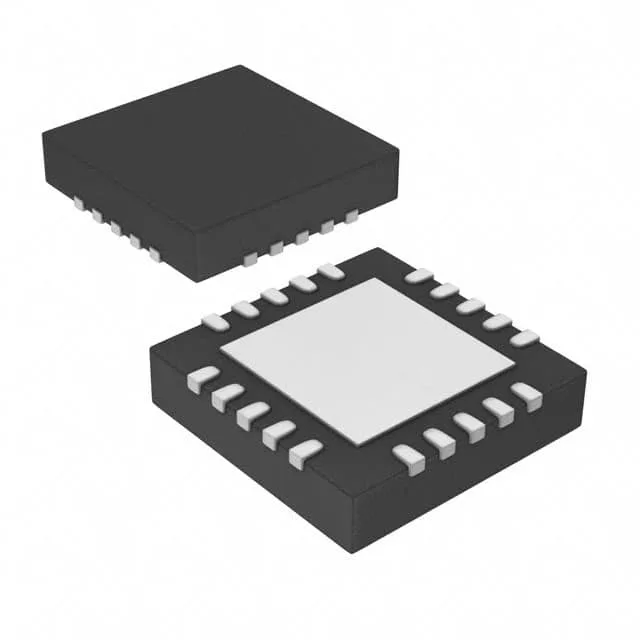
The Microchip PIC16F689-I/ML is an 8-bit PIC MCU in the PIC® 16F family, clocked at 20 MHz with 7 KB of Flash program memory, 256 bytes of RAM, and a separate 256-byte EEPROM block. That EEPROM is a practical advantage for storing calibration constants or configuration data without wearing the Flash. The part integrates a 12-channel 10-bit ADC, I²C/SPI/UART serial connectivity, and the usual watchdog, brown-out reset, and POR peripherals — enough to handle sensor monitoring, simple control loops, or human-machine interface tasks in a single chip. The 20-QFN package (4x4 mm body) with an exposed pad keeps the board footprint small and helps thermal dissipation when the MCU is driving I/O continuously.
At 20 MHz, the PIC16F689 executes most single-cycle instructions in 200 ns. That is enough for UART baud rates up to 115200, I²C fast mode (400 kHz), and SPI clock rates in the low MHz range.
Memory sizing: Flash, RAM, and the EEPROM advantage
7 KB of Flash (4K x 14 words) is modest by today's standards, but the 256-byte EEPROM block means you can store calibration data, serial numbers, or fault logs without wearing out the program memory. The 256-byte RAM is the tight spot — firmware that uses large lookup tables or buffers will need to work within that limit or page data from Flash. For comparison, the PIC16LF1559-I/SS offers 14 KB Flash and 1 KB RAM at 32 MHz, but lacks EEPROM.
It is ROHS3 compliant. If you are looking to dual-source, the PIC16LF1559-I/SS is a pin-compatible 8-bit alternative with a 32 MHz core and more memory, but verify the supply voltage difference (1.8 V minimum vs. 2 V) and the lack of EEPROM before substituting.