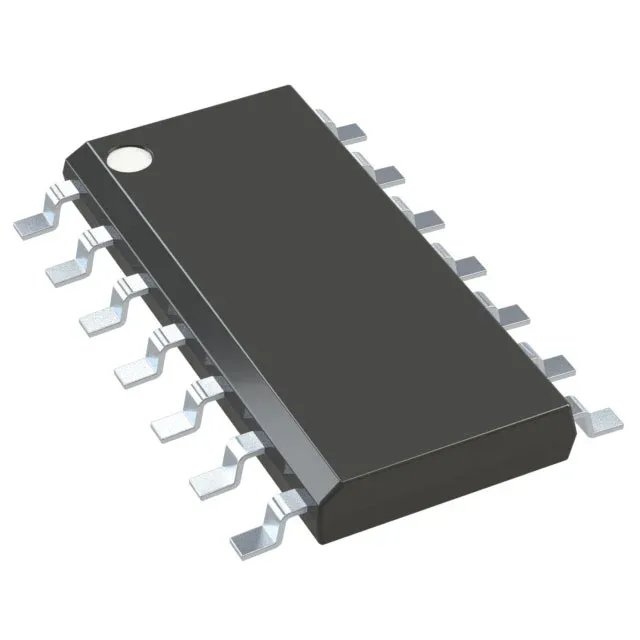
Microchip Technology PIC16F688T-I/SL — Microcontrollers & Processors (MCU / MPU / DSP)

PIC16F688T-I/SL 8-bit MCU, 20 MHz, 7 KB Flash, 14-SOIC

MPNPIC16F688T-I/SL
Active

Microchip PIC® 16F PIC16F688T-I/SL, 8-bit MCU, 20 MHz, 7 KB Flash, 256 x 8 RAM, 256 x 8 EEPROM, 8-ch 10-bit ADC, UART, 14-SOIC, -40 to 85°C, 2V to 5.5V.

$2.0200Ref. price · indicative, final on quote
Packaging14-SOIC (0.154", 3.90mm Width)
RoHSROHS3 Compliant
SeriesPIC® 16F
Independent supplier — new & surplus stockAuthenticity-screened · ESD-safe packingListing updated Jul 2026

Specifications

PIC16F688T-I/SL specifications
ParameterValue
SeriesPIC® 16F
MountingSurface Mount
Oscillator typeInternal
Program memory typeFLASH
Voltage - supply (Vcc (Vdd))2V ~ 5.5V
Operating temperature-40°C ~ 85°C (TA)
Speed20MHz
PackageTape & Reel (TR) Cut Tape (CT)
RAM size256 x 8
Core size8-Bit
EEPROM size256 x 8
PeripheralsBrown-out Detect/Reset, POR, WDT
ConnectivityUART/USART
Number of i (O)12
Core processorPIC
Case14-SOIC (0.154\", 3.90mm Width)
Data convertersA/D 8x10b
Program memory size7KB (4K x 14)

Product details

What this 8-bit PIC brings to the board

20 MHz core and 7 KB Flash — sizing the firmware budget

The 20 MHz clock gives the 8-bit core enough throughput for UART polling at standard baud rates and for reading the ADC channels in sequence. The 7 KB Flash (organized as 4K x 14 words) is the hard limit on firmware size — you can fit a modest state machine, a command parser, and calibration tables, but a full protocol stack like Modbus RTU will be tight. The 256 bytes of RAM hold variables for a few dozen sensor readings, and the 256 bytes of EEPROM store calibration constants or configuration that survives power loss.

ADC and UART — analog readout and serial link

Eight 10-bit ADC channels cover multiple analog inputs — thermistors, potentiometers, current-sense resistors — without needing an external mux. The UART provides a single serial port for talking to a host controller, a display module, or a radio. No SPI or I²C on this part, so any peripheral using those buses needs bit-banging on the 12 available I/O lines.

It is ROHS3 compliant, which clears the restriction for most commercial and industrial builds.

Frequently asked questions

What is the difference between PIC16F688T-I/SL and PIC16F688-I/SL?

The two parts share the same die, firmware, and 14-SOIC package. The only difference is the shipping medium: PIC16F688T-I/SL comes in Tape & Reel (for pick-and-place), while PIC16F688-I/SL ships in tubes. The T suffix is a packaging code, not a functional variant.