What the 50 µA quiescent current means for your battery budget
The MIC5225-2.7YM5 TR is a fixed 2.7 V output LDO from Microchip Technology's MIC5225 family, delivering up to 150 mA with a typical quiescent current of just 50 µA. That Iq figure is the spec that matters for always-on peripherals — a sensor node pulling 50 µA from a 200 mAh coin cell loses only 0.6 % of its capacity per year to the regulator's own draw, leaving almost all the energy for the load. For a 3.6 V Li-ion cell, that gives about 450 mV of headroom before the battery hits its discharge floor — enough margin for the cell's internal resistance drop under load.
Protection features that simplify the BOM
Built-in over-current, over-temperature, and reverse polarity protection mean the MIC5225-2.7YM5 TR does not need external clamp diodes or a separate current-limit resistor on the output. The reverse polarity block handles a miswired battery without letting the substrate diode conduct — a common failure mode in portable equipment where the battery connector is not keyed. The enable pin (active high) lets the system processor gate the regulator output for power sequencing or sleep-mode shutdown. When the enable pin is pulled low, the output goes to high-impedance and the supply current drops below the 50 µA Iq floor — the datasheet typical shutdown current is in the sub-microamp range.
Temperature grade and package fit
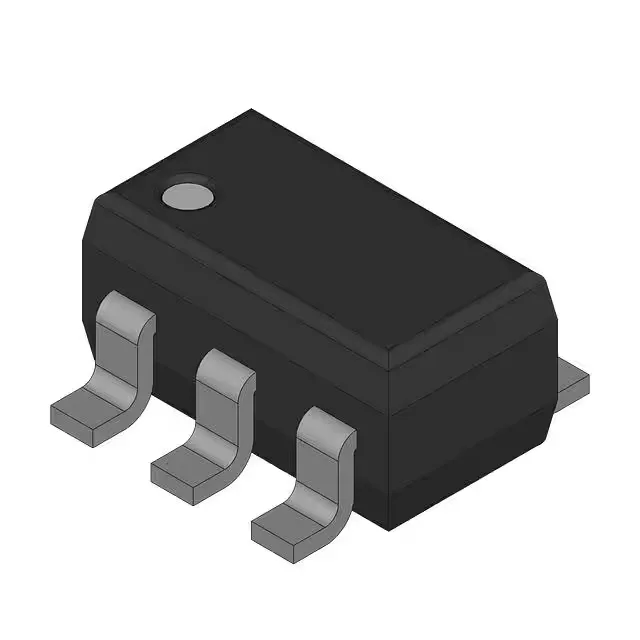
The -40°C to 125°C junction temperature range qualifies this LDO for industrial control enclosures and under-hood automotive modules that see 105°C ambient. The supplier device package is SOT-23-5, which is the same physical footprint as the SC-74A case code.
Active lifecycle — no end-of-life pressure
The fixed 2.7 V output version is one of several fixed-voltage options in the MIC5225 family. If the BOM calls for a different output voltage, the same pinout and package are available at other fixed levels — no layout change needed.