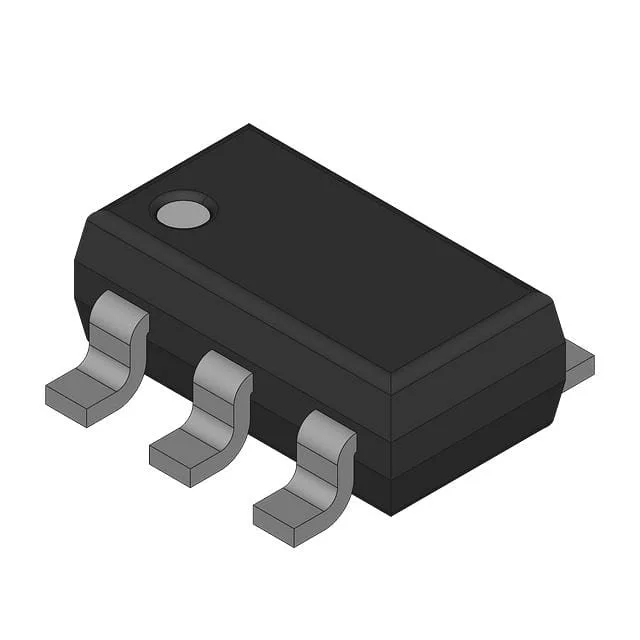
What the 180 Vpp output means for your EL panel
The MIC4830YML is a low-noise EL (electroluminescent) lamp driver from Microchip Technology, designed to generate a high-voltage AC waveform from a low-voltage DC supply. Its 180 Vpp typical output drives the capacitive load of an EL panel — the voltage swing is what excites the phosphor layer to emit light, so the panel brightness depends on both the peak-to-peak voltage and the drive frequency. That quiescent draw is low enough for battery-powered or energy-harvesting applications — a small coin cell or a single Li-ion cell can power the driver for extended periods when the EL lamp is off or in standby.
Switching frequency and dimming limitation
The internal oscillator runs between 65 kHz and 250 kHz, set by an external resistor. The frequency directly affects the EL lamp's brightness and audible noise — lower frequencies (around 100 Hz) produce less audible whine but may reduce brightness, while higher frequencies increase brightness at the cost of more audible noise from the panel. Because the part has no dimming input (Dimming: No), brightness is controlled only by adjusting the supply voltage or the external frequency-setting resistor, not by a PWM or analog dim pin. The 8-VDFN exposed-pad package (3×3 mm MLF) keeps the footprint small — about the size of a grain of rice — which suits compact portable devices like backlit keypads, wearable displays, or small-area EL panels.