2.25V threshold — what it means for a 3.3V rail
The MIC2775-22BM5TR is a simple reset/power-on reset IC from Microchip that monitors a single voltage rail with a 2.25V threshold. On a nominal 3.3V supply, that threshold trips at roughly 68% of nominal — early enough to catch a brownout before the downstream MCU or FPGA starts behaving erratically, but not so early that normal ripple triggers a false reset. The complementary outputs give both an active-high and active-low reset signal, so you can drive a processor's RESET pin and an enable line from the same supervisor without an external inverter.
140 ms timeout — boot sequencing margin
The reset timeout is 140 ms minimum, meaning the output holds the processor in reset for at least 140 ms after the supply crosses the 2.25V threshold. That window gives the bulk capacitor on the 3.3V rail time to charge to its final value and the oscillator time to stabilize before the CPU fetches its first instruction. If your processor has a fast-starting PLL or a small local regulator, the 140 ms floor is generous enough to cover most start-up sequences without adding a separate delay IC.
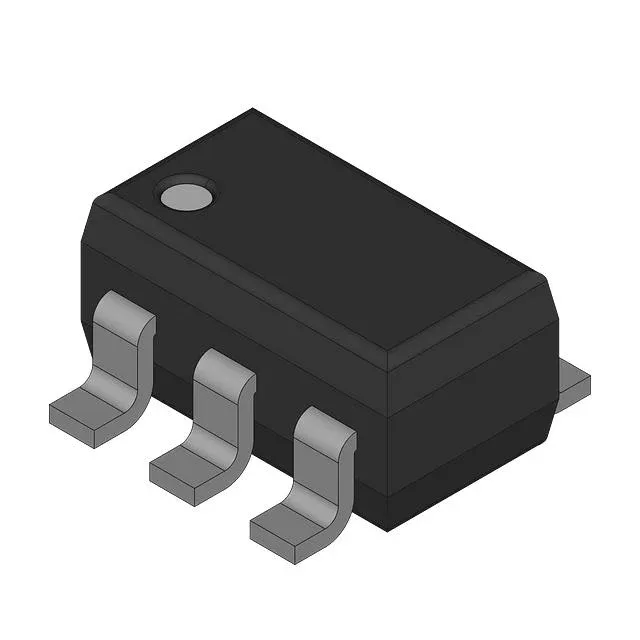
The SOT-23-5 package (SC-74A, SOT-753 footprint) is a five-pin surface-mount part with 0.95 mm pitch, easy to route on a two-layer board and compatible with standard pick-and-place.