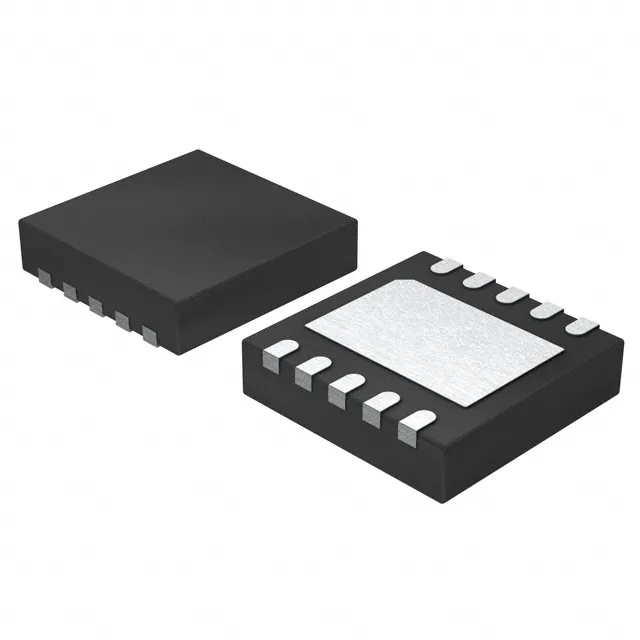
The Microchip MIC2211-GSYML-TR is a dual positive fixed-output LDO regulator that delivers 150 mA on one output and 300 mA on the other, with preset voltages of 1.8 V and 3.3 V respectively. This asymmetric current pairing is intentional — it suits designs where a low-current analog rail (1.8 V for PLLs, ADC reference, or I/O) coexists with a higher-current digital core or memory rail at 3.3 V, all from a single input up to 5.5 V. Quiescent current sits at 80 µA, which keeps standby draw low for battery-powered or always-on subsystems. Enable control on both regulators lets the system power down unused rails independently.
PSRR and dropout — the two specs that decide your input rail
PSRR is rated at 60 dB at 1 kHz, rolling off to 40 dB at 20 kHz. That roll-off matters if you are powering a sensitive analog front-end or a radio that draws current at switching frequencies above 1 kHz — the regulator still attenuates ripple, but the margin shrinks. For a 5 V input feeding the 3.3 V rail, the 0.42 V dropout at 300 mA leaves about 1.28 V headroom, which is comfortable. But if the input sags to 3.6 V during a cold-crank event, the 3.3 V rail has only 0.3 V of margin — the dropout spec becomes the binding constraint. The 1.8 V rail with its 0.25 V dropout at 150 mA is easier to satisfy from a 3.3 V intermediate bus.
Package and thermal — the 10-MLF exposed pad is not optional
The datasheet pad pattern expects a 3x3 mm solder area on the PCB with at least four thermal vias to the ground plane. Without those vias, the junction-to-board thermal resistance roughly doubles, and the 300 mA channel will hit thermal shutdown well below the 125 °C rated maximum in still air.