Why the AEC-Q100 grade matters for this temp sensor
The MCP9700AT-E/TTVAO carries Automotive AEC-Q100 qualification, which means it's been through the full reliability screening — temperature cycling, ESD, latch-up — that a non-automotive grade part skips. For a temperature sensor sitting on a PCB inside an engine bay ECU or a transmission controller, that screening is the difference between a part that drifts 2°C after 1000 thermal cycles and one that holds its calibration.
Output slope and accuracy — what 10 mV/°C means on the bench
Accuracy is specified as ±2°C across the 0°C to 70°C band, widening to -2°C / +4°C at the temperature extremes.
SOT-23-3 package — reflow and placement notes
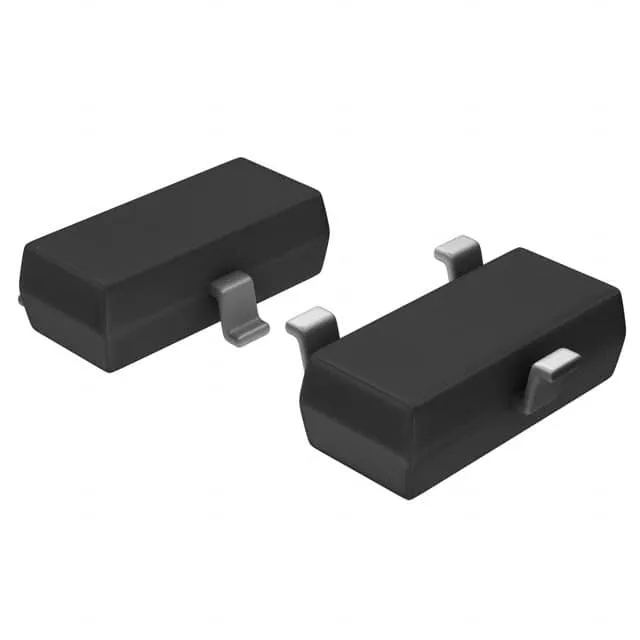
The SOT-23-3 (TO-236-3, SC-59) is a three-lead small-signal package with 0.95 mm pitch and 1.9 mm body width. It's a standard footprint that places cleanly on a two-layer board without via fan-out — the gate, drain, and source pads (or in this case Vdd, Vss, Vout) break out directly to traces. Moisture sensitivity level is not explicitly stated in the record, but SOT-23 packages from Microchip typically ship at MSL 1 — no bake required before reflow, even after extended shelf storage.
Active production — sourcing and compliance
The base product number is MCP9700, and this variant carries the full AEC-Q100 automotive qualification suffix. RoHS compliance is standard for Microchip's current production; the part ships with the manufacturer's standard documentation package including the datasheet and certificate of compliance.