Charger IC for a 2-cell Li-ion pack
The MCP73213-A6W/MF is a constant-current, constant-voltage linear charger IC for two-series Li-Ion or Li-Polymer cells, delivering a programmable charge current up to 1.1 A into an 8.4 V battery pack. The 13 V maximum supply input gives headroom above the 8.4 V regulation point, so the pass element stays in dropout only when the input rail sags near the battery voltage.
Two cells in series means the charger regulates the top-off voltage at 8.4 V (4.2 V per cell) — the standard termination for Li-Ion chemistry. If your pack is a single cell or three cells, this part does not fit. The charge current is constant-current programmable, not fixed; the 1.1 A maximum sets the ceiling for the charge rate. For a 2200 mAh pack, that is a 0.5 C rate — a safe balance between charge time and cell stress. Over-voltage fault protection is built in — the charger shuts down if the battery voltage exceeds the regulation threshold, preventing runaway charging on a failed cell or a disconnected sense line.
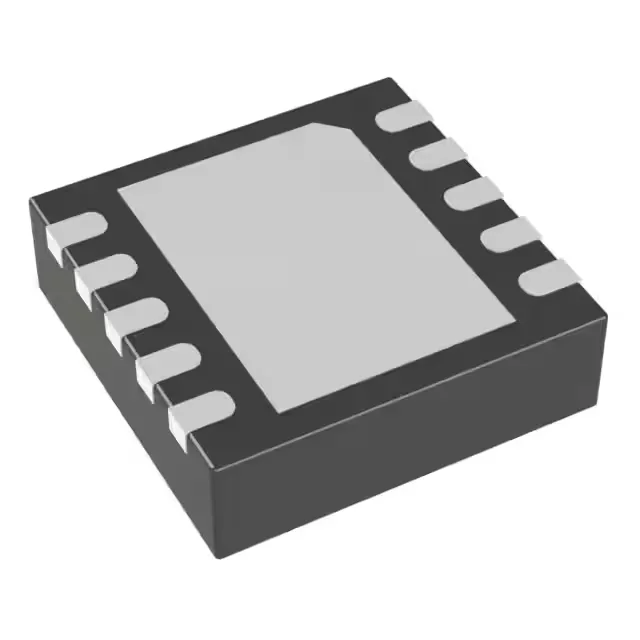
Housed in a 10-VFDFN with exposed pad (3x3 mm body), the part is surface-mount and requires the centre pad to be soldered to a thermal land on the PCB — the pad carries the heat from the linear pass element, so the board copper area sets the effective thermal resistance. Supplied in tube, not tape-and-reel — if your line feeds from a pick-and-place tray or tube feeder, the package form factor is fine; for reel-fed machines, confirm the tube-to-reel transfer or request an alternate packaging option.
Lifecycle and compliance
ROHS3 compliant, with no exemptions that would block EU or UKCA market entry.