Dual 10k pot with 257 taps — fine trim for analog trim
The MCP4661T-103E/ML is a dual-channel digital potentiometer with a 10k ohm end-to-end resistance and 257 taps per channel, giving a step size of roughly 39 ohms between adjacent wiper positions. That resolution is enough for precision gain setting in an op-amp stage or for trimming a sensor bridge offset without external trim pots. The wiper resistance is 75 ohms typical, which matters at the low end of the resistance range — when the wiper is at the B terminal, the residual resistance adds a small offset that the downstream circuit sees.
Non-volatile wiper — no re-init on power-up
The memory type is non-volatile, so the wiper position is stored across power cycles. This is the difference between a part that holds its calibration after a brownout and one that resets to mid-scale every time the rail comes up. For an adjustable bias supply or a factory-calibrated sensor module, that saves a boot-time write sequence.
I²C interface — two-wire bus, multiple devices
Communication is over I²C, with a selectable address feature that lets you put two or more of these on the same bus without address conflicts. The mute feature allows the wiper to be disconnected from the high side, which is useful for power-on mute circuits or to force a known output state during initialization.
16-QFN 4x4mm — small footprint with thermal pad
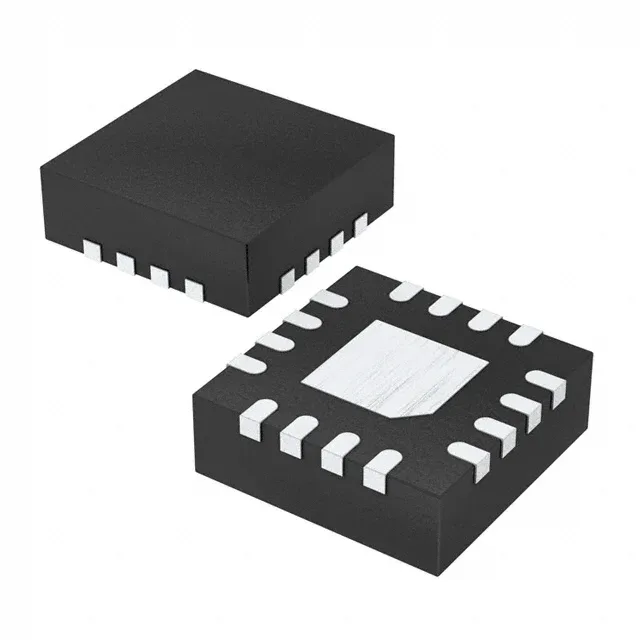
The package is a 16-lead QFN with an exposed pad, 4x4mm body. The exposed pad needs a thermal via pattern under it if the part dissipates more than a few milliwatts — the pad is tied to VSS and acts as the primary heat path. The tape-and-reel option is the standard for automated pick-and-place assembly. Cut tape is also available for prototypes or low-volume builds.