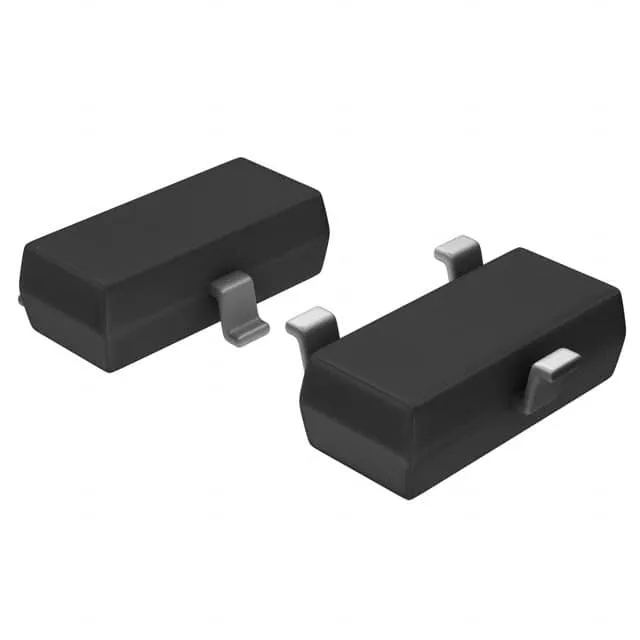
SOT-23-3 footprint and the supply-rail envelope
The MCP1799T-3302H/TT is a fixed 3.3 V output LDO in the SOT-23-3 package, delivering 80 mA continuous. The 45 V maximum input voltage covers a 12 V automotive battery with load-dump margin — the internal pass transistor's breakdown rating handles the transient without an external clamp.
Dropout and quiescent — sizing the headroom and the idle draw
Quiescent current is 45 µA typical, rising to 110 µA maximum under all conditions — low enough for an always-on ECU supply that powers a CAN transceiver in sleep mode.
PSRR across the audio band — why it matters for sensor rails
Power-supply rejection ratio is 70 dB at 100 Hz, rolling off to 35 dB at 100 kHz. The 70 dB figure at line frequency means 120 Hz ripple from a rectified alternator is attenuated by a factor of ~3000 — a clean rail for an analog sensor or an ADC reference. The roll-off above 10 kHz is typical for an LDO; upstream switching noise above that band needs a ferrite bead or a pi filter ahead of the input.
AEC-Q100 Grade 0 — the under-hood temperature band
This is the Grade 0 band — suitable for engine-bay electronics that see 125°C ambient on a hot day with self-heating margin. The SOT-23-3 package's thermal resistance (junction-to-ambient around 250°C/W in still air) means the 80 mA load at 3.3 V dropout dissipates roughly 90 mW, keeping the junction rise under 25°C at 85°C ambient.