What the logic density and memory mean for your design
The M2GL010-VFG256I packs 12,084 logic elements and 933,888 bits of on-chip RAM — that is enough fabric for a modest soft-core processor plus a handful of peripheral controllers, or a glue-logic consolidation that replaces a dozen discrete 74-series parts. The 138 user I/O give you room to bring out a parallel bus, a few SPI/UART interfaces, and still have pins left for status LEDs and a reset button.
Supply voltage and temperature — the operating envelope
The core and I/O banks run from 1.14 V to 2.625 V, which means this part works with both 1.2 V and 1.8 V or 2.5 V rails — you do not need a separate regulator for each voltage domain if your board already carries one of those.
Package and board-fit — 256-ball BGA reality
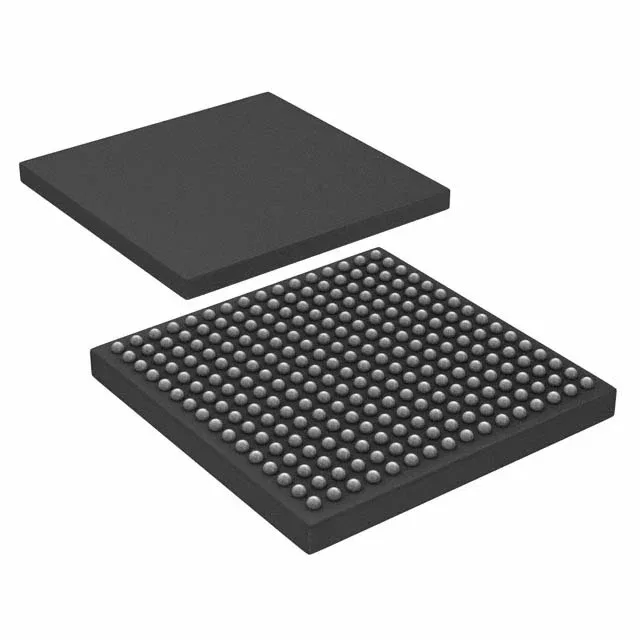
The 256-LFBGA (supplier device package 256-FPBGA, 14x14 mm) is a fine-pitch BGA — the ball pitch is 0.80 mm, which is manageable on a standard 4-layer PCB with via-in-pad or dogbone fan-out. No exposed thermal pad, so the primary heat path is through the solder balls into the board copper; a solid ground plane under the package helps spread the ~1-2 W typical dissipation. The surface-mount footprint matches the JEDEC MO-275 standard, so the land pattern is well-documented.