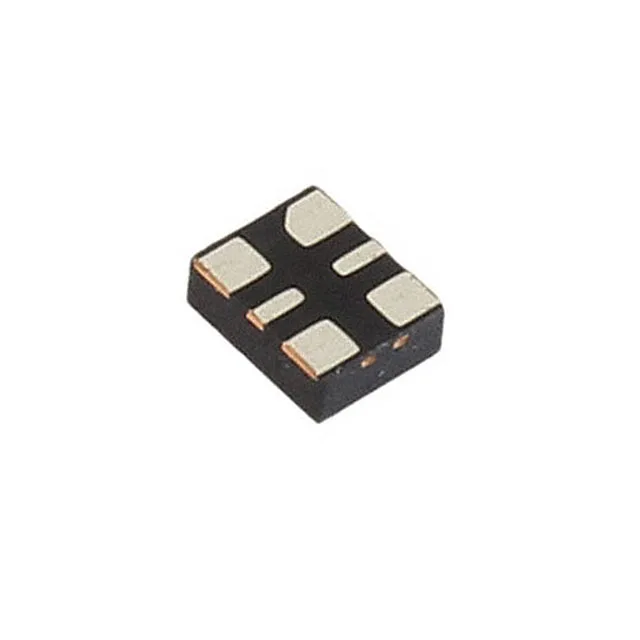
Microchip Technology DSC8124CI5 — Crystals & Oscillators

DSC8124CI5 MEMS XO, HCSL, 10-460 MHz, ±10 ppm, Active

MPNDSC8124CI5
Active

Microchip Technology DSC8124 series, MEMS XO (Standard), HCSL output, 10 MHz ~ 460 MHz, ±10 ppm stability, 6-SMD No Lead, Tube.

$4.7300Ref. price · indicative, final on quote
Sourced new & surplus through independent channelsAuthenticity-screened · ESD-safe packingListing updated Aug 2026

Specifications

DSC8124CI5 specifications
ParameterValue
TypeXO (Standard)
SeriesDSC8124
MountingSurface Mount
Programmable typeBlank (User Must Program)
Voltage2.25V ~ 3.6V
Current - supply42mA
Current - supply (Disable)22 mA
Frequency stability±10ppm
Available frequency range10 MHz ~ 460 MHz
Operating temperature-40°C~85°C
Size (Dimension)0.126\" L x 0.098\" W (3.20mm x 2.50mm)
Height - seated0.035\" (0.90mm)
OutputHCSL
PackageTube
FunctionEnable/Disable
Base resonatorMEMS
Case6-SMD, No Lead

Product details

MEMS-based HCSL clock source for high-speed serial interfaces

The DSC8124CI5: The HCSL signaling standard is the typical reference clock for PCIe Gen1/2/3, Ethernet SERDES, and FPGA transceiver banks — the 0.7 V swing and common-mode voltage are set by the output stage, so the receiver termination (50 Ω to ground per line) must match the HCSL specification, not LVDS or LVPECL. This is a blank (user-programmable) device — it ships without a factory-set frequency and requires programming via Microchip's TimeFlash or a compatible programmer before placement. The available frequency range covers common PCIe reference clocks (100 MHz, 125 MHz) and Ethernet SERDES rates, making it a flexible BOM line for multi-rate designs.

±10 ppm stability and industrial temperature grade

This tighter-than-typical stability (±25 ppm or ±50 ppm is common for general-purpose oscillators) matters for precision timing in networking equipment, test instrumentation, and motor-drive control loops where accumulated jitter or frequency drift can push the link margin below the receiver's lock threshold. Maximum supply current is 42 mA — typical for a MEMS HCSL oscillator running at higher output frequencies — so budget this into the 3.3 V rail's total current draw during power-tree design.

6-SMD No Lead footprint and enable/disable function

The footprint is compatible with standard 3.2 mm x 2.5 mm oscillator land patterns — no board spin needed if migrating from a quartz XO of the same package.

Frequently asked questions

What is the DSC8124CI5 output type and what does HCSL mean for my design?

The DSC8124CI5 outputs HCSL (High-Speed Current Steering Logic), a differential signaling standard with a 0.7 V swing and a common-mode voltage of roughly 0.35 V. It is the reference clock standard for PCIe Gen1/2/3 and is also common in Ethernet PHY and FPGA transceiver applications. Termination must be 50 Ω to ground on each line — not the 100 Ω differential termination used for LVDS — so the board layout and AC-coupling caps (if used) should follow the HCSL routing guidelines, not LVDS or LVPECL.

What frequency range does the DSC8124CI5 support and is it pre-programmed?

The DSC8124CI5 supports a 10 MHz to 460 MHz frequency range. It ships as a blank (user-programmable) device — the frequency is not factory-set. You must program it using Microchip's TimeFlash programmer or a compatible programming fixture before placing it on the board. This allows a single BOM line to serve multiple frequency variants by programming the same blank part at the time of assembly.