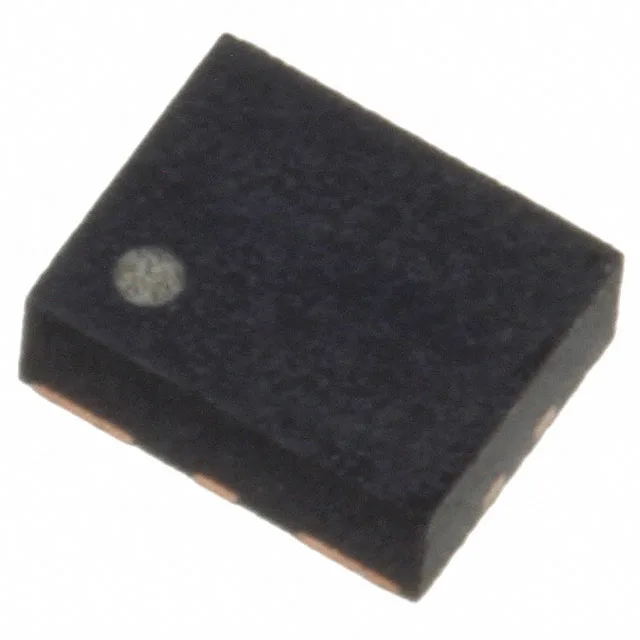
Microchip Technology DSC8123DI2-PROGRAMMABLE — Crystals & Oscillators

Microchip DSC8123DI2-PROGRAMMABLE MEMS XO, LVDS, 10-460 MHz

MPNDSC8123DI2-PROGRAMMABLE
Active

Microchip Technology DSC8123DI2-PROGRAMMABLE, DSC8123 series, XO (Standard) MEMS oscillator, LVDS output, 10 MHz ~ 460 MHz, ±25 ppm, AEC-Q100, 6-SMD no lead.

$24.1700Ref. price · indicative, final on quote
Independent supplier — new & surplus stockAuthenticity-screened · ESD-safe packingListing updated Aug 2026

Specifications

DSC8123DI2-PROGRAMMABLE specifications
ParameterValue
TypeXO (Standard)
SeriesDSC8123
MountingSurface Mount
Supply voltage2.25V ~ 3.6V
Current - supply32mA
Current - supply (Disable)22 mA
Available frequency range10 MHz ~ 460 MHz
Frequency stability (Total)±25ppm
Operating temperature-40°C ~ 85°C
Size (Dimension)0.098\" L x 0.079\" W (2.50mm x 2.00mm)
Height - seated0.035\" (0.90mm)
OutputLVDS
PackageTube
RatingsAEC-Q100
FunctionEnable/Disable
Base resonatorMEMS
Case6-SMD, No Lead

Product details

MEMS resonator, LVDS output, 10-460 MHz range

The DSC8123DI2-PROGRAMMABLE: This covers the common clock rates for high-speed serial interfaces (PCIe, SATA, Gigabit Ethernet) and FPGA reference clocks without needing a different crystal for each frequency.

For a 100 MHz reference, that is ±2.5 kHz of total drift — tight enough for most Ethernet PHY and SerDes PLLs without external VCXO trimming.

Package and board-fit

The 2.0 mm x 2.5 mm footprint is the same as many standard quartz oscillators, so the PCB layout can accept either technology.

Frequently asked questions

What is the DSC8123DI2-PROGRAMMABLE's output type?

It outputs LVDS (Low-Voltage Differential Signaling), a differential pair that rejects common-mode noise and delivers clean edges over longer PCB traces than single-ended CMOS.

Is the DSC8123DI2-PROGRAMMABLE AEC-Q100 qualified?

It is suitable for designs targeting PPAP submission.

What is the available frequency range for this oscillator?

The DSC8123DI2-PROGRAMMABLE covers 10 MHz to 460 MHz, programmable via Microchip's factory configuration. The same part number can be ordered at any frequency within that band, simplifying inventory management across multiple clock rates.