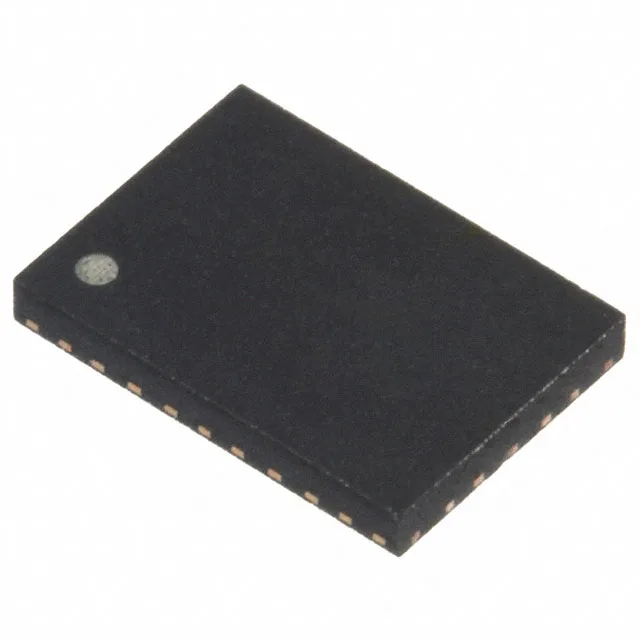
The DSC8121AM2T: What sets this part apart from quartz-based oscillators is the full military-temperature span of -55°C to 125°C with a frequency stability of ±25 ppm — that's the same stability spec held across the entire temperature band, not just at 25°C. The MEMS resonator itself is the reason this part survives reflow without the frequency shift you'd see from a quartz crystal's aging or mechanical shock. A quartz blank can crack or shift frequency after a lead-free reflow profile; the MEMS die is silicon-micromachined and sealed at wafer level, so it comes out of the oven still hitting the ±25 ppm window. For a board that goes through multiple rework cycles — say, a prototype or a low-volume production run — that consistency matters more than the datasheet numbers suggest.
A stencil aperture that covers 50-70% of the pad area prevents voiding while still giving a solid thermal joint. Pin 1 is marked on the package top, so orientation is unambiguous under a microscope.