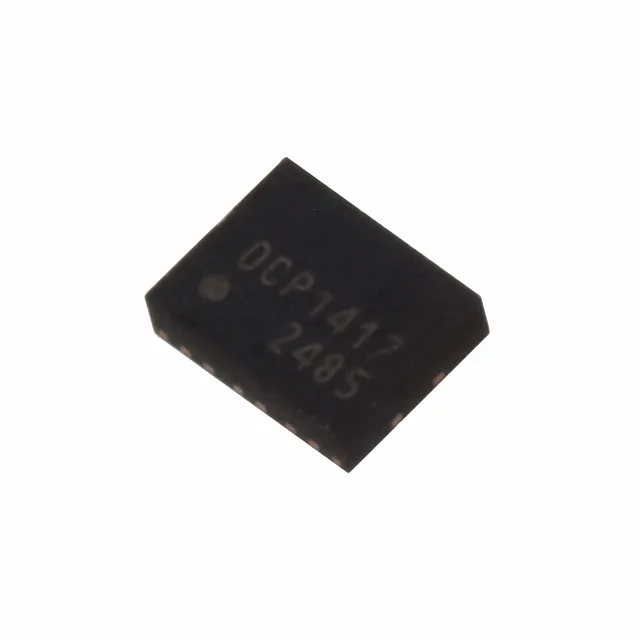
Microchip Technology DSC8104CI5 — Crystals & Oscillators

DSC8104CI5 MEMS XO, HCSL, 10 MHz – 460 MHz, AEC-Q100

MPNDSC8104CI5
Active

Microchip Technology DSC8104 series, XO (Standard) MEMS oscillator, DSC8104CI5, HCSL output, 10 MHz to 460 MHz, 2.25V-3.6V, -40°C to 85°C, AEC-Q100, 6-SMD No Lead.

$4.7300Ref. price · indicative, final on quote
Sourced new & surplus through independent channelsAuthenticity-screened · ESD-safe packingListing updated Aug 2026

Specifications

DSC8104CI5 specifications
ParameterValue
TypeXO (Standard)
SeriesDSC8104
MountingSurface Mount
Programmable typeBlank (User Must Program)
Voltage2.25V ~ 3.6V
Current - supply42mA
Available frequency range10 MHz ~ 460 MHz
Frequency stability (Total)±10ppm
Operating temperature-40°C~85°C
Size (Dimension)0.126\" L x 0.098\" W (3.20mm x 2.50mm)
Height - seated0.035\" (0.90mm)
OutputHCSL
PackageTube
RatingsAEC-Q100
FunctionStandby
Base resonatorMEMS
Case6-SMD, No Lead

Product details

MEMS timing for automotive and industrial clock trees

The DSC8104CI5: Its HCSL output is the standard for PCIe reference clocks and high-speed serial links, delivering the controlled slew rate and differential swing that PCIe Gen 1 through Gen 3 PHYs expect.

AEC-Q100 qualification and supply flexibility

It is suitable for under-hood and chassis-domain timing where a quartz oscillator's shock or vibration sensitivity could be a concern.

Blank programmable — order the unprogrammed device

This order code ships as a blank (unprogrammed) unit. The user must program the target frequency using Microchip's TimeFlash or a compatible programmer before the oscillator is functional. Maximum supply current is 42 mA across the full frequency range — a reasonable budget for a differential-output oscillator driving a 50-Ω terminated HCSL load.

Frequently asked questions

What is the output type of the DSC8104CI5?

The DSC8104CI5 outputs HCSL (High-Speed Current Steering Logic), the differential standard used for PCIe reference clocks and other high-speed serial interfaces.