MEMS resonator versus quartz — deployment context
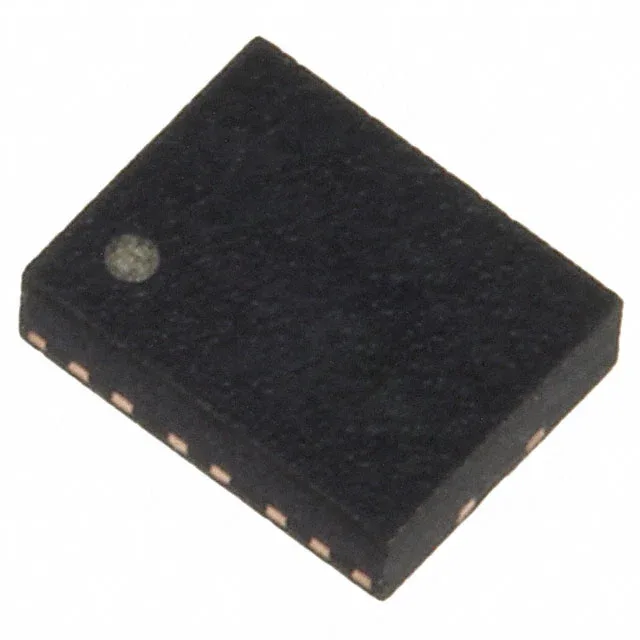
The DSC8101CI5T: MEMS oscillators are inherently more shock- and vibration-tolerant (no crystal blank to fracture), which is why this part carries AEC-Q100 qualification — it survives the engine-bay and chassis-mounted vibration profiles a quartz can would fail. This footprint is standard for 6-pin MEMS oscillators — the PCB land pattern matches the industry-standard 3.2×2.5 mm layout, so a layout engineer can spin the board without a custom footprint.
Programmable blank — field-configurable clock tree
The DSC8101CI5T is a Blank (User Must Program) variant — the frequency is not factory-set at the order code level. The buyer or integrator programs the output frequency within the 10 MHz to 100 MHz range using Microchip's TimeFlash or a compatible programmer. This means one BOM line can serve multiple frequency builds if the programming step is budgeted in production. CMOS output drives standard logic inputs directly — no external level translation for most MCU or FPGA clock inputs. The output swing is rail-to-rail CMOS, so the rise/fall time into a 15 pF load is consistent across the supply range.
Sourcing posture and compliance documentation
Compliance documentation (RoHS, REACH, conflict minerals) is standard for Microchip's active catalog. The AEC-Q100 qualification implies the part passes the full suite of automotive stress tests (preconditioning, temperature cycling, HAST, high-temperature storage) — the OEM auditor will expect PPAP documentation, which Microchip provides for this grade.