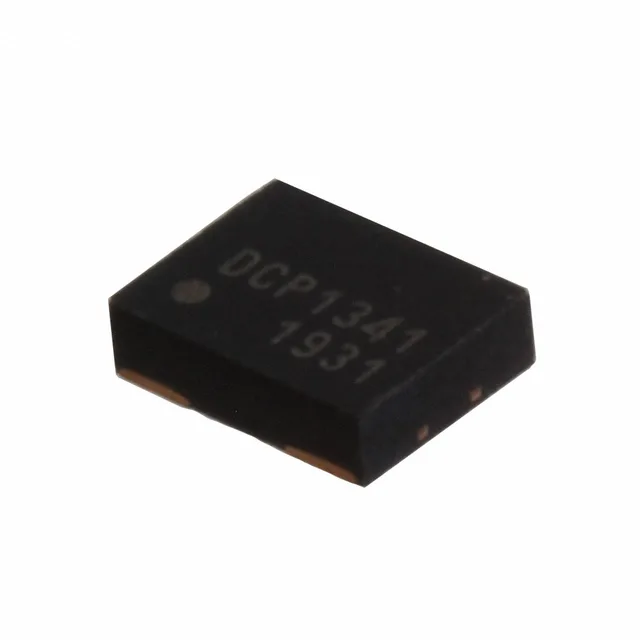
The DSC8004CI2: The CMOS output is a single-ended 3.3 V/2.5 V/1.8 V rail-to-rail swing that directly drives most MCU, FPGA, or SoC clock inputs without external level translation. This stability is the combined effect of temperature, supply, and aging — enough for a UART baud clock or a 100 Mbps Ethernet PHY reference, but not for a precision GPS or RF carrier that demands sub-ppm holdover.
The DSC8004CI2 is listed as a blank (user-programmable) device — it arrives unprogrammed and must be configured to the target frequency before use, typically via Microchip's TimeFlash or a compatible programmer. This means the same inventory part number serves multiple frequency requirements, but the programming step adds a non-recurring handling cost and a small lead-time increment at the programming house or in-house. Because it is not a fixed-frequency oscillator, the procurement lead time for the DSC8004CI2 depends on both the component availability and the programming queue — not just the wafer/package cycle. For prototype quantities, distributors often offer pre-programmed samples; for production, a programmed reel or tube is quoted per the BOM frequency.
The four pads are standard for a MEMS oscillator — power, ground, output, and enable/standby — and the no-lead construction means the terminations are flush with the package body, reducing parasitic inductance compared to a gull-wing lead. Surface-mount mounting with a 0.65 mm pitch (typical for this package class) requires standard reflow soldering; the MSL rating is not listed here, but MEMS oscillators from Microchip typically ship at MSL 1 or 2. The tube packaging is the shipping medium — for high-volume pick-and-place, request tape-and-reel packaging instead.