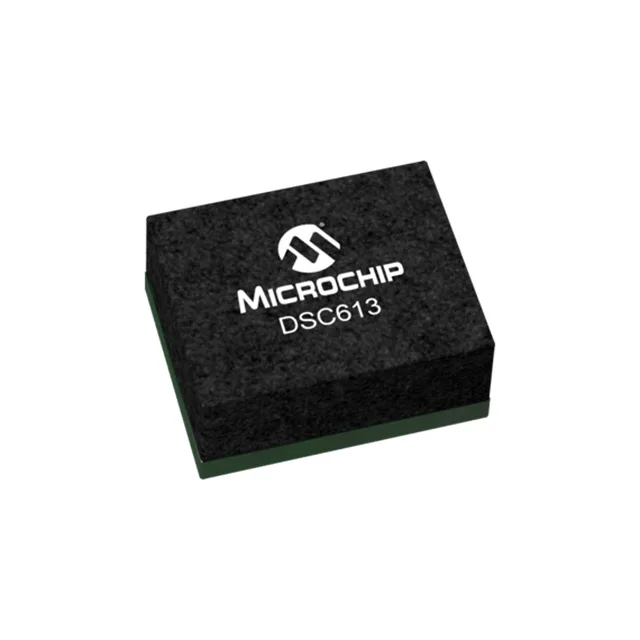
Microchip Technology DSC613RI3A-010U — Crystals & Oscillators

Microchip DSC613RI3A-010U MEMS XO, 50/25/27 MHz, LVCMOS

MPNDSC613RI3A-010U
Active

Microchip Technology DSC613 series MEMS XO (Standard), DSC613RI3A-010U, triple output 50 MHz / 25 MHz / 27 MHz, LVCMOS, ±20 ppm, 6-VFLGA, industrial temp.

$1.5750Ref. price · indicative, final on quote
Sourced new & surplus through independent channelsAuthenticity-screened · ESD-safe packingListing updated Aug 2026

Specifications

DSC613RI3A-010U specifications
ParameterValue
TypeXO (Standard)
SeriesDSC613
Voltage1.71V ~ 3.63V
Current - supply6.5mA
Current - supply (Disable)1.5 µA
Frequency stability±20ppm
Frequency - output 150MHz
Frequency - output 225MHz
Frequency - output 327MHz
Operating temperature-40°C~85°C
Height0.035\" (0.89mm)
Size (Dimension)0.098\" L x 0.079\" W (2.50mm x 2.00mm)
OutputLVCMOS
PackageTube
FunctionEnable/Disable
Base resonatorMEMS
Case6-VFLGA

Product details

The DSC613RI3A-010U: Max supply current is 6.5 mA with all three outputs active, and drops to 1.5 µA in disable mode (Enable/Disable function via pin). For a battery-powered sensor node that clocks down between reads, the disable current is below the self-discharge floor of a CR2032 coin cell.

Temperature and stability envelope

A 50 MHz carrier drifting ±20 ppm means the output edge jitter stays under 1 ns at the receiver, which keeps setup/hold margins intact for a 100 MHz bus.

The 0.50 mm pitch requires a solder mask defined pad; the board house should use the NSMD (non-solder-mask-defined) footprint recommended in the datasheet's layout guide to avoid solder bridging.

Frequently asked questions

What is the closest pin-compatible alternative in the DSC613 family?

The DSC613 series shares the same 6-VFLGA package and pinout across output frequency configurations. A different variant with the same package code (RI3A) but a different frequency combination would be footprint-compatible, but the output frequencies differ — confirm the target frequencies against the BOM before substituting.