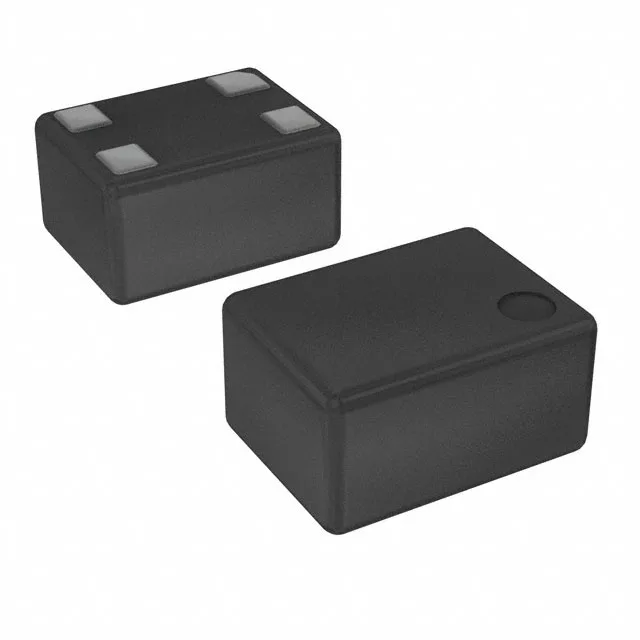
Microchip Technology DSC6121HI2A-00AK — Crystals & Oscillators

DSC6121HI2A-00AK MEMS XO, 25/27MHz, 1.71-3.63V, CMOS

MPNDSC6121HI2A-00AK
Obsolete

Microchip Technology DSC61XX series MEMS XO (Standard), 25MHz & 27MHz CMOS outputs, 4-VFLGA package, 1.71V~3.63V supply, ±25ppm stability, -40°C~85°C, 3mA typ supply current.

$1.1700Ref. price · indicative, final on quote
Independent supplier — new & surplus stockAuthenticity-screened · ESD-safe packingListing updated Jul 2026

Specifications

DSC6121HI2A-00AK specifications
ParameterValue
TypeXO (Standard)
SeriesDSC61XX
Supply voltage1.71V ~ 3.63V
Current - supply3mA (Typ)
Frequency stability±25ppm
Frequency - output 125MHz, 27MHz
Operating temperature-40°C~85°C
Height0.035\" (0.89mm)
Size (Dimension)0.063\" L x 0.047\" W (1.60mm x 1.20mm)
OutputCMOS
PackageBag
Base resonatorMEMS
Case4-VFLGA

Product details

Dual-frequency MEMS oscillator in a 1.6×1.2mm footprint

The DSC6121HI2A-00AK: This dual-output architecture lets a single oscillator serve both a main clock and an auxiliary timing domain (e.g., MCU core and USB peripheral) without a second crystal or PLL, saving board space and reducing BOM count.

Maximum supply current is specified at 3 mA typ — low enough that a 1.8 V rail with 10 mA headroom can feed the oscillator and still leave margin for the load capacitance and termination.

Temperature stability and deployment envelope

The CMOS output swing is rail-to-rail, so the oscillator drives standard digital inputs directly; no external bias or termination network is required for short PCB traces under 50 mm.

Frequently asked questions

How can I order the DSC6121HI2A-00AK or check its availability?

This part is obsolete per Microchip's lifecycle status.

What does the dual-frequency output (25 MHz and 27 MHz) mean for my design?

The oscillator generates both 25 MHz and 27 MHz simultaneously on separate CMOS outputs, so it can clock two independent logic domains — for example, a 25 MHz MCU core and a 27 MHz USB PHY — from a single device, eliminating a second oscillator or a PLL multiplier.