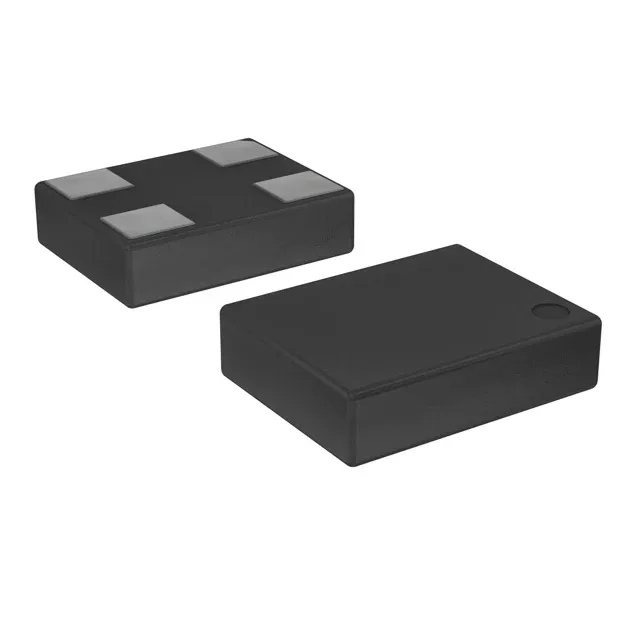
Microchip Technology DSC6121CE2A-0081 — Crystals & Oscillators

DSC6121CE2A-0081 MEMS XO, 22.5792/24.576MHz, CMOS, Obsolete

MPNDSC6121CE2A-0081
Obsolete

Microchip Technology DSC61XX series MEMS XO (Standard), DSC6121CE2A-0081, dual frequency 22.5792MHz and 24.576MHz, CMOS output, ±25ppm stability, 1.71V~3.63V supply, 4-VDFN package, tube.

Sourced new & surplus through independent channelsAuthenticity-screened · ESD-safe packingListing updated Jul 2026

Specifications

DSC6121CE2A-0081 specifications
ParameterValue
TypeXO (Standard)
SeriesDSC61XX
Voltage1.71V ~ 3.63V
Current - supply3mA (Typ)
Frequency stability±25ppm
Frequency - output 122.5792MHz, 24.576MHz
Operating temperature-20°C~70°C
Height0.035\" (0.90mm)
Size (Dimension)0.126\" L x 0.098\" W (3.20mm x 2.50mm)
OutputCMOS
PackageTube
Base resonatorMEMS
Case4-VDFN

Product details

Dual-frequency MEMS XO for audio-video clock trees

The DSC6121CE2A-0081: These two clock rates are the standard audio and video reference frequencies: 22.5792 MHz for 44.1 kHz-based audio sample rates and 24.576 MHz for 48 kHz-based audio and SDI video. A single oscillator replaces two quartz cans on the bill of materials.

Typical current draw is 3 mA max, keeping the thermal load low in the 4-VDFN package. The MEMS resonator itself draws negligible current compared to the output buffer, so the supply current is dominated by the CMOS load being driven. For a 24.576 MHz clock, ±25 ppm translates to a maximum frequency error of about 614 Hz — well within the pull-in range of a typical audio PLL.

MEMS reliability vs quartz — the sourcing angle

For a BOM line locked to this dual-frequency output pair, the only sourcing channel is independent distribution holding new-old-stock or surplus inventory. No pin-compatible direct successor is recorded in the Microchip DSC61XX family; a replacement would require requalifying a different order code or a board spin.

Frequently asked questions

What is the DSC6121CE2A-0081 used for?

This MEMS XO provides two standard clock frequencies — 22.5792 MHz for 44.1 kHz-based audio sample rates and 24.576 MHz for 48 kHz-based audio and SDI video timing. It is used as a reference clock in audio/video interface ICs, FPGA clock trees, and broadcast equipment where both audio sample rate families must be supported from one oscillator.