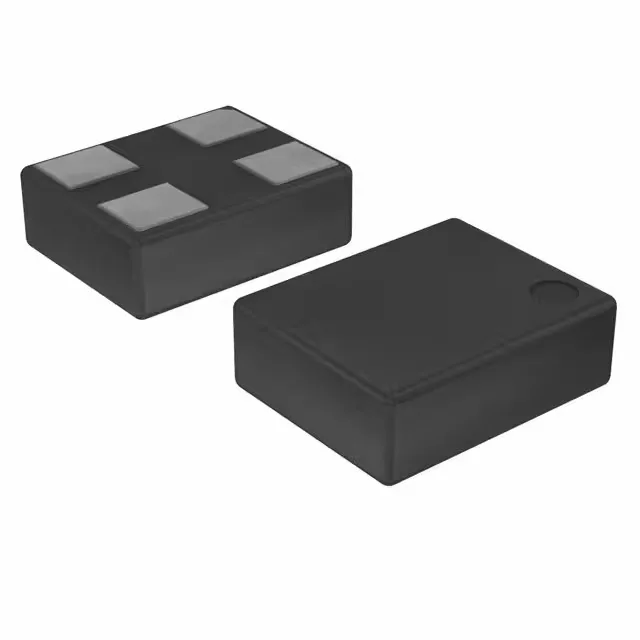
Obsolete MEMS oscillator — sourcing reality
The DSC6111JE1A-000.0000T: No official successor order code is recorded in the lifecycle data. A board spin or parametric substitute from the DSC61XX family may be required for new designs; the blank-programmable nature (user must set the output frequency) means any replacement must support the same frequency programming flow.
MEMS resonator vs quartz — what AEC-Q100 means
Total frequency stability is ±50ppm across the full operating range — this includes temperature, supply voltage, and aging effects. For a CAN bus or Ethernet clock, 50ppm is adequate; for a precision ADC reference clock, a tighter stability grade would be needed.
This simplifies the power tree and saves a regulator slot on the BOM. Active current draw is 3mA typical (max), and the standby disable current drops to 12µA.
Blank programmable — frequency set during assembly
The DSC6111JE1A-000.0000T ships as a blank device (user must program the output frequency). The available frequency range is 1 MHz to 100 MHz, set via Microchip's programming tools before reflow. This means the same order code can serve multiple frequency variants in production — inventory flexibility, but the programming step adds a manufacturing operation. The CMOS output swings rail-to-rail and drives standard digital loads (MCU clock inputs, FPGA reference clocks, Ethernet PHY oscillators). Output drive strength is matched to the 4-SMD package's 2.50mm x 2.00mm footprint — the small body limits the capacitive load it can drive cleanly; keep trace length short and load capacitance under 15pF.