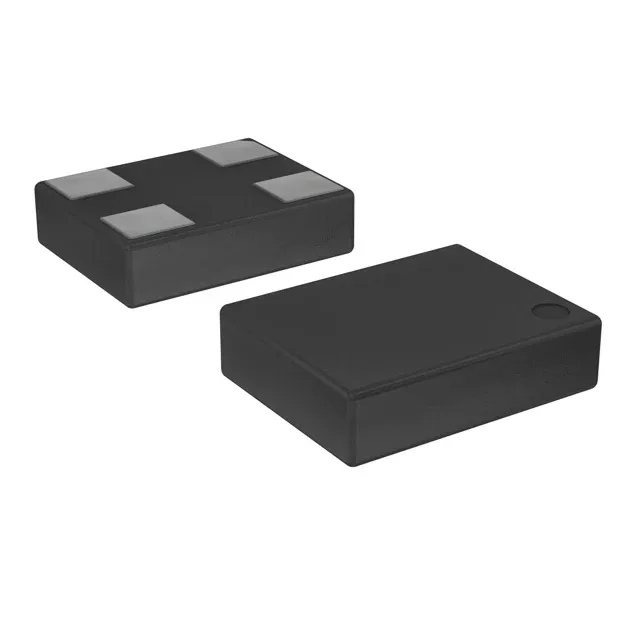
Microchip Technology DSC6102CI1A-000.0000T — Crystals & Oscillators

Microchip DSC6102CI1A-000.0000T MEMS XO, CMOS, 1.71-3.63V

MPNDSC6102CI1A-000.0000T
Obsolete

Microchip Technology DSC61XX series XO (Standard) MEMS oscillator, DSC6102CI1A-000.0000T, CMOS output, 1.71V~3.63V supply, AEC-Q100, 4-SMD No Lead package.

Independent supplier — new & surplus stockAuthenticity-screened · ESD-safe packingListing updated Jul 2026

Specifications

DSC6102CI1A-000.0000T specifications
ParameterValue
TypeXO (Standard)
SeriesDSC61XX
MountingSurface Mount
Programmable typeBlank (User Must Program)
Supply voltage1.71V ~ 3.63V
Current - supply3mA (Typ)
Available frequency range1 MHz ~ 100 MHz
Frequency stability (Total)±50ppm
Operating temperature-40°C~85°C
Size (Dimension)0.126\" L x 0.098\" W (3.20mm x 2.50mm)
Height - seated0.035\" (0.90mm)
OutputCMOS
PackageTape & Reel (TR)
RatingsAEC-Q100
FunctionEnable/Disable
Base resonatorMEMS
Case4-SMD, No Lead

Product details

MEMS oscillator in a 4-SMD package

The DSC6102CI1A-000.0000T: The part is blank-programmable over a 1 MHz to 100 MHz frequency range with a total frequency stability of ±50 ppm.

Automotive temperature range and qualification

Typical supply current is 3 mA, which keeps the thermal load low in dense PCB layouts.

Sourcing reality for an obsolete MEMS oscillator

Because the part is blank-programmable, any replacement must match the programmed frequency and stability (±50 ppm). A pin-compatible MEMS oscillator from the same DSC61XX family with the same package and supply range could serve as a functional alternative, but the user must verify the frequency stability and output drive strength against the original design.

Frequently asked questions

What is the closest pin-compatible alternative to the DSC6102CI1A-000.0000T?

Any DSC61XX-series MEMS oscillator in the same 4-SMD, No Lead package with a 1.71V–3.63V supply range is footprint-compatible. The replacement must be programmed to the same output frequency and maintain ±50 ppm total stability. No single official cross-reference is published; the user must verify the programmed frequency matches the original design.